
Hardscape Craft
Driveway Pavers
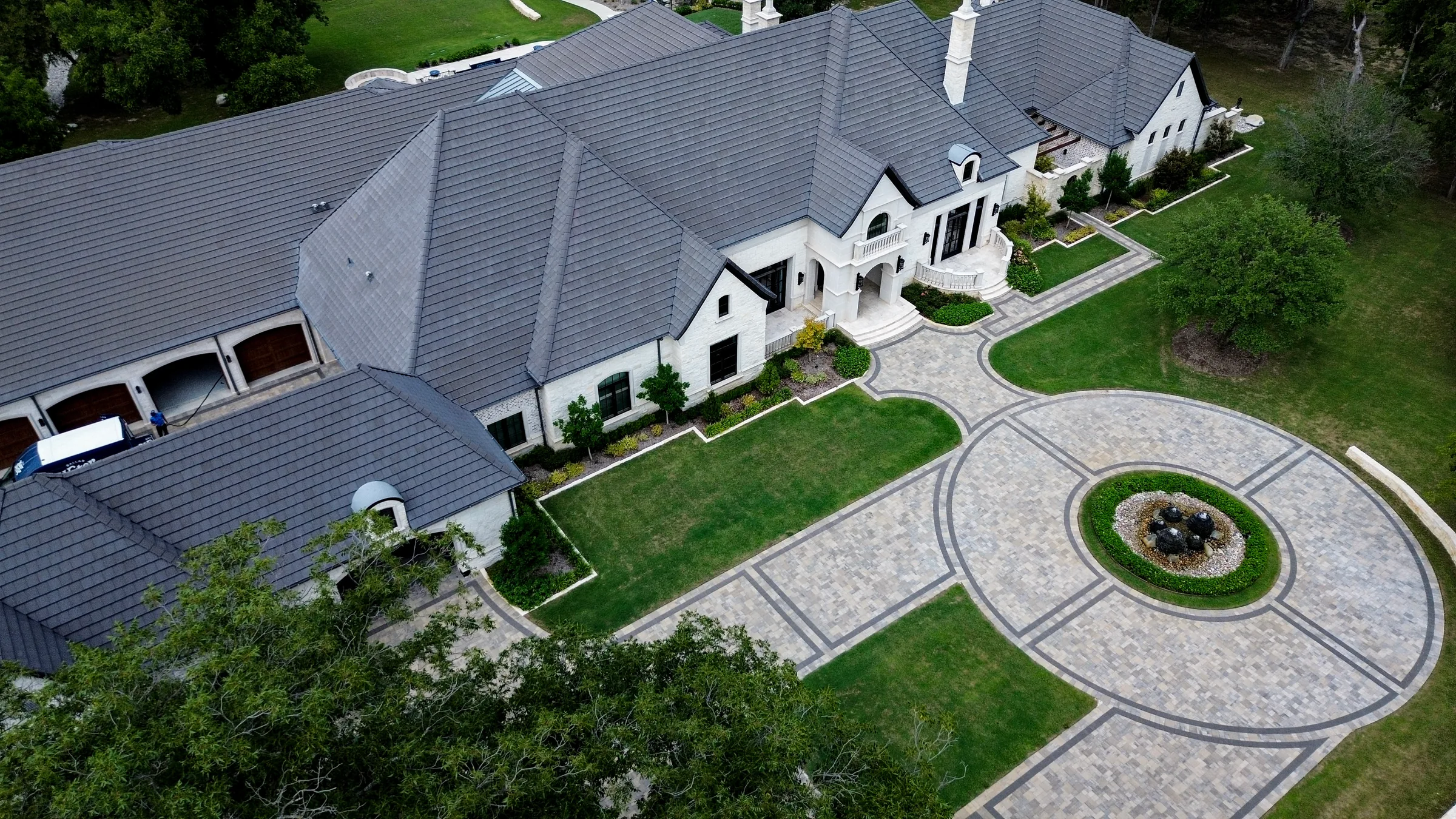
Come home to a driveway with lasting curb appeal, a distinctive pattern, and the strength to handle daily vehicle traffic.
Driveway Performance
Driveway pavers need vehicle-rated base work, clean apron transitions, and curb appeal
A driveway paver project has to look refined from the street while handling daily vehicle weight. Precision Pavers reviews the driveway width, garage threshold, street apron, guest parking needs, drainage direction, base depth, edge restraint, paver thickness, border pattern, and how the drive connects to walks or front-yard landscape.
The estimate should separate appearance choices from load-bearing requirements. Vehicle traffic, turning movement, runoff across the apron, and tie-ins to existing concrete or planting beds can change the recommendation before color or pattern is selected.
- Vehicle load, parking, and turning movement
- Garage, apron, and walkway tie-ins
- Base depth, paver thickness, and edge restraint
- Drainage across the driveway and front approach
Construction Details
Match The Base, Pattern, Border, And Drainage To The Drive
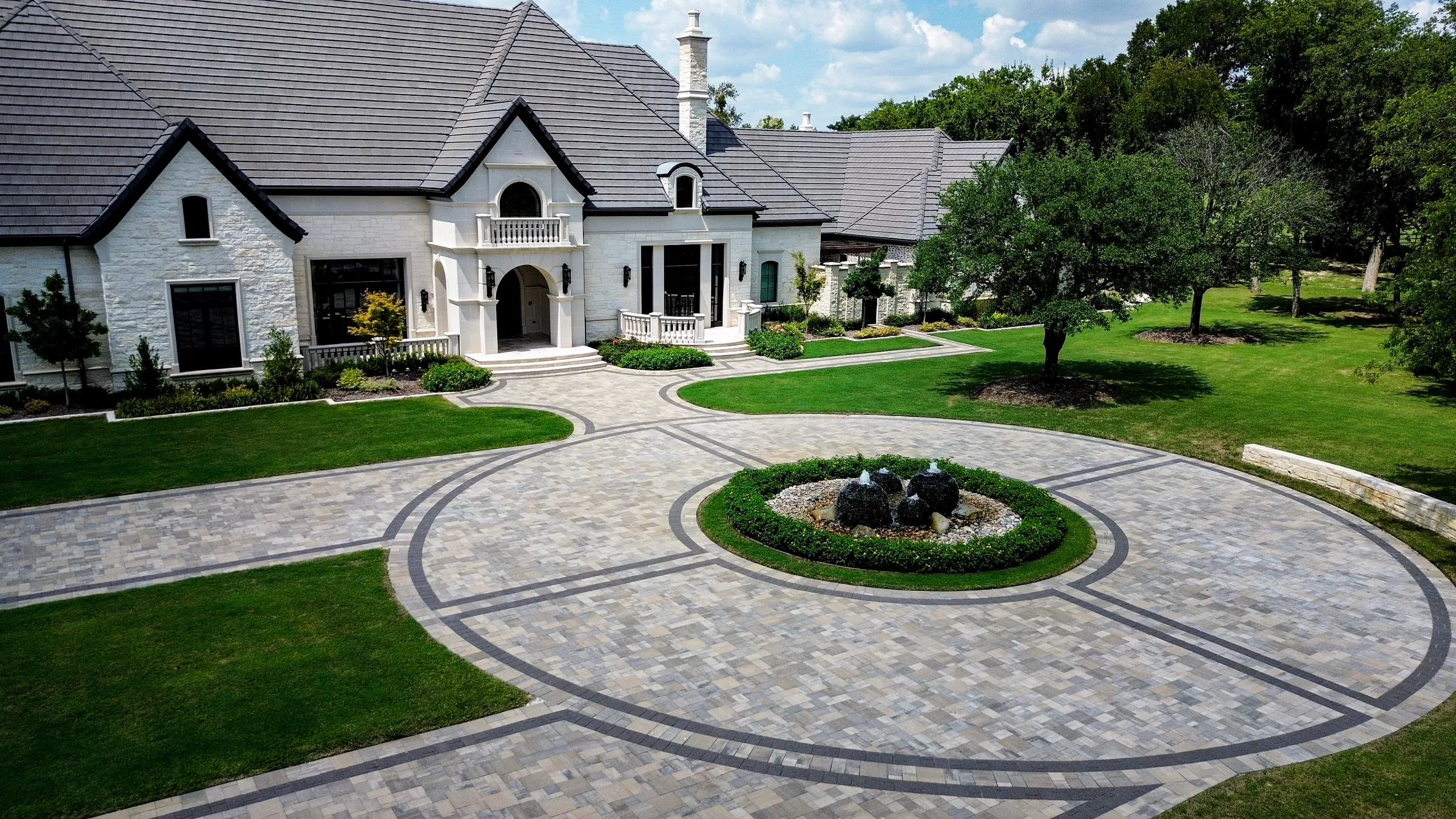
Paver thickness, pattern, border, base preparation, edge restraint, and drainage details all matter more on a driveway than on a light-use path.
North Texas heat, rain, and soil movement make driveway base work and water movement central to the plan.
Preparation And Installation
Set Elevations And Turning Areas Before Installation Begins
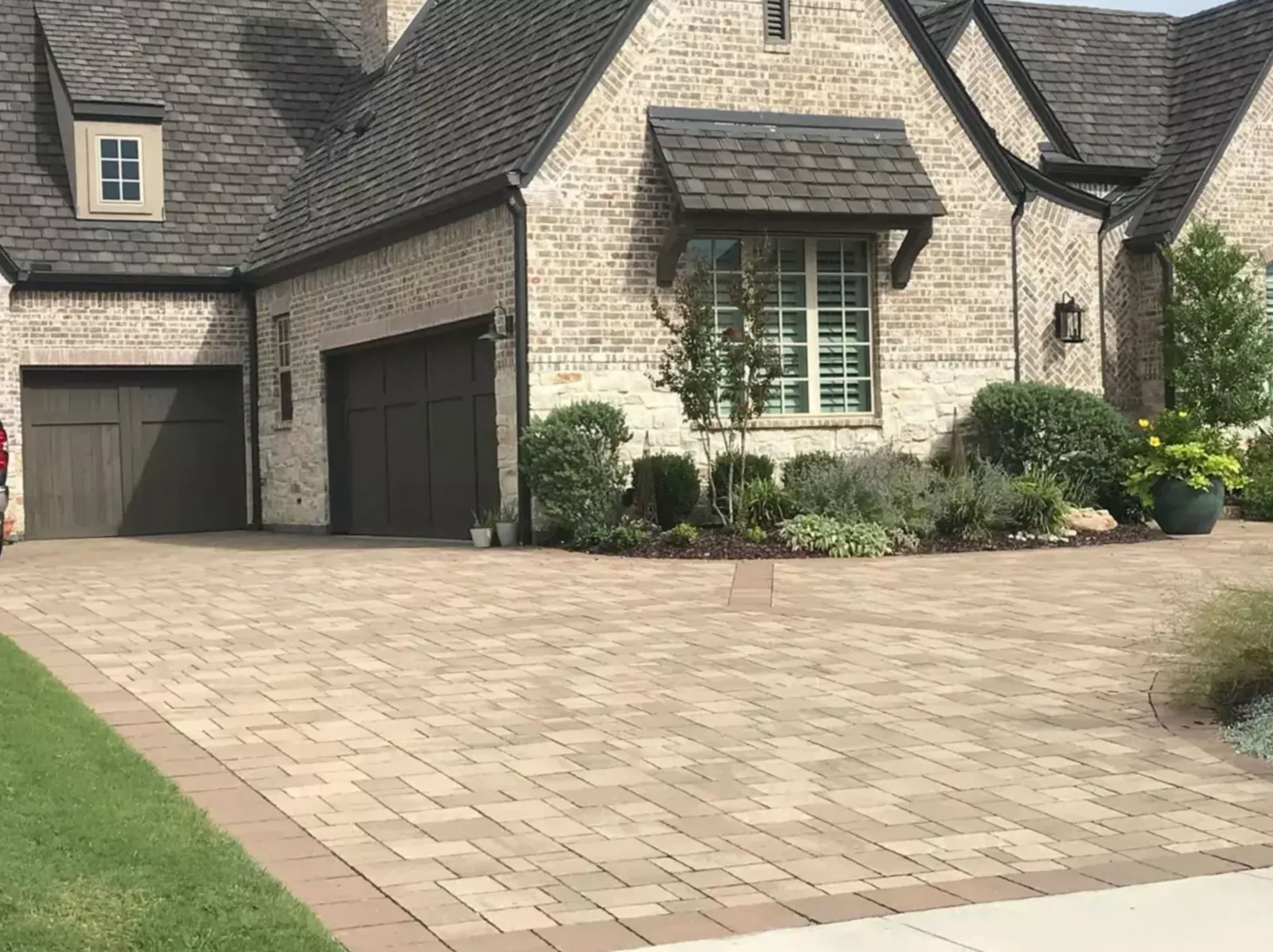
A driveway paver estimate should define the dimensions, vehicle use, access, grade, drainage, pattern direction, and garage or street tie-ins.
- 01Review vehicle use, driveway layout, and apron connections.
- 02Check grade, drainage, base depth, and edge restraint needs.
- 03Select paver style, border, and pattern direction.
- 04Install the driveway with stable base work and tight transitions.
Before Work Begins
Driveway Base, Drainage, And Pattern Questions
What should be considered before planning driveway pavers?
Precision Pavers looks at how the area will be used, its dimensions, access, grade, drainage, nearby surfaces, and the suitability of vehicle-rated pavers and base depth.
How does North Texas weather affect driveway pavers?
Consider heat, rain exposure, and water movement when choosing materials and planning use. Where the work includes paving, foundations, or equipment supports, actual ground conditions also matter. Review the selected products and site requirements for the proposed installation.
Can driveway pavers be coordinated with nearby outdoor improvements?
Review the driveway where it meets the garage, street, front walk and planting beds. Those boundaries influence levels, turning space, borders and drainage. Identify any related work before choosing the final extent of the paved area.
What site details matter for vehicle-ready curb appeal?
Include the property address, wide and close photos, approximate dimensions, access notes, and clear views of worn pavement, weak edges, poor drainage, and awkward garage or street transitions so the first review reflects the actual site.
Plan The Work
Come home to a stronger first impression.
Tell us what you want to change and how you hope to use the finished space. A few current photos are enough to start.