
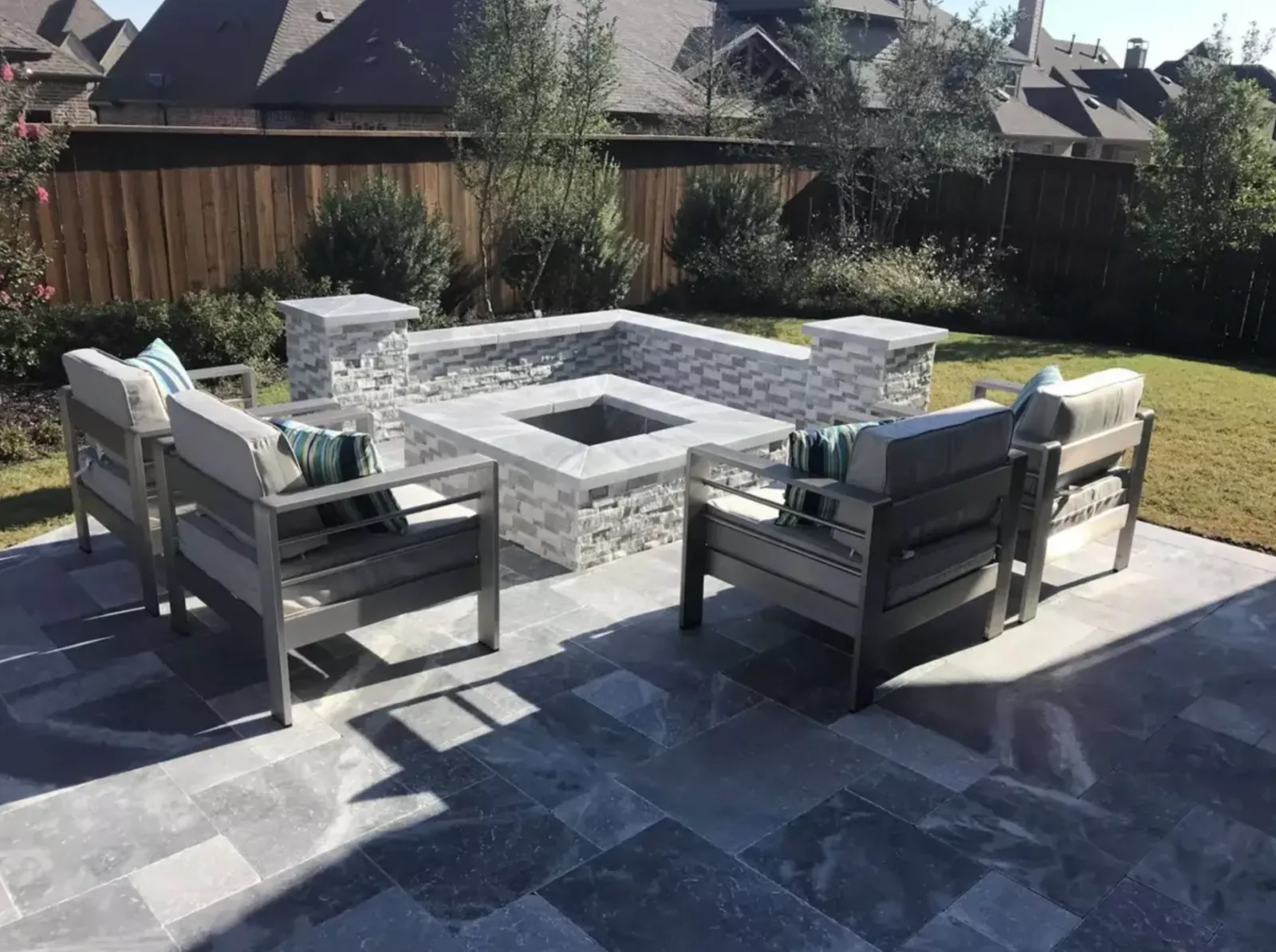
1. Give the pattern a direction
A repeated layout can lead the eye toward a door or gathering area. A more intricate field can become the focal point itself. Choose the effect deliberately, using the available patterns for the selected product.
2. Limit the material palette
Bring the paving sample beside the house, pool coping and existing masonry. Decide which finish should lead and which should recede. Several attractive samples do not necessarily make a cohesive arrangement together.
Surface comfort also needs product-specific consideration. Pavers are not automatically cooler than a poured surface; exposure and the actual product matter. Include shade and the timing of outdoor use in the design.
3. Define rooms without blocking the route
A border or change in pattern can distinguish dining from lounging. Keep a comfortable route around occupied furniture and make the connection to doors, gates and the pool clear. An elaborate layout should not make the yard harder to use.
4. Choose one edge detail to repeat
A restrained border repeated at a patio and walkway can connect separate spaces. Check its relationship to steps, bed edges and transitions so the detail looks intentional at the ends as well as in the middle.
5. Work with the levels that belong on the site
Changes in level need practical reasons and appropriate design. A step, wall or raised area affects access, drainage and adjoining construction. Resolve those conditions before adding elevation changes for appearance.
Bring the preferred details to a Precision Pavers design conversation along with photos of what you want to keep.