
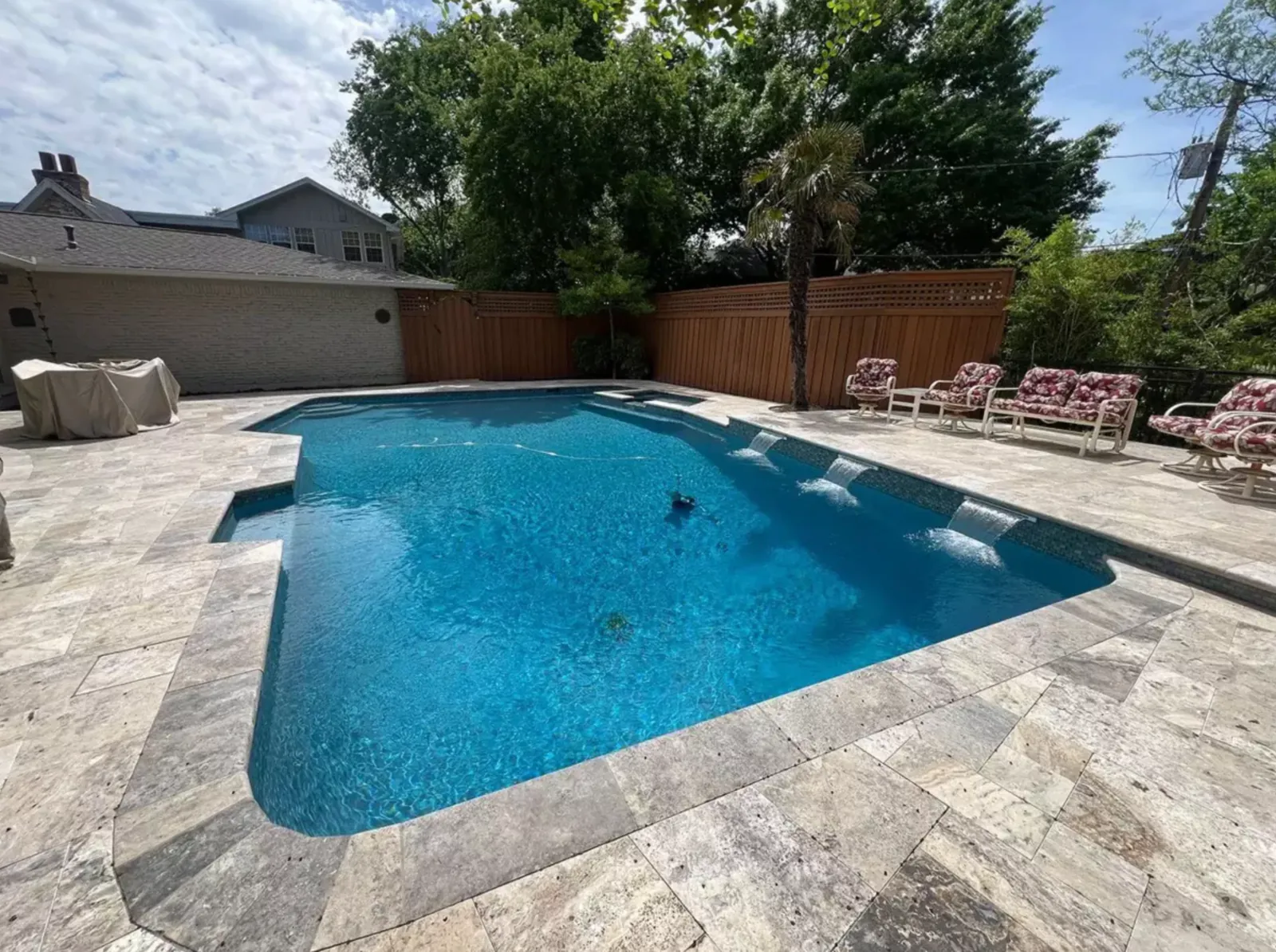
Separate the three everyday uses
Swimming needs a clear relationship between the water and the access points. Sitting needs room for loungers, tables and occupied chairs. Movement needs a route between the house, gates and equipment that stays useful when the furniture is in place.
Draw those uses together. A larger deck is not automatically a better one if its usable areas are poorly connected.
Make the finish a specific product choice
Compare color, texture, dimensions, suitability and care for the actual proposed product. Wet conditions and strong sun deserve attention; no broad material category guarantees traction or comfortable bare feet. Product claims should be checked against the exact finish being considered.
Coordinate samples with the coping and house. Patterns and borders can define areas, but they should support the movement around the pool.
Resolve the water and the edges
The deck, coping, joints, doors, steps and adjacent yard need to be considered together. Ordinary joints between pavers do not by themselves establish a drainage solution. The design should identify how water is handled for the site.
The proposal should also distinguish deck work from any changes to the pool, equipment or other systems, with the relevant professionals responsible for those items.
Keep the scope and the care information
Record removals, preparation, product selections, transitions and disturbed-area restoration. Keep the written product and installation coverage with care instructions at handoff.
Precision Pavers can discuss a pool-deck renovation around these uses and connections. The benefit to plan for is a more useful outdoor setting, without assuming a guaranteed resale return or service life.