
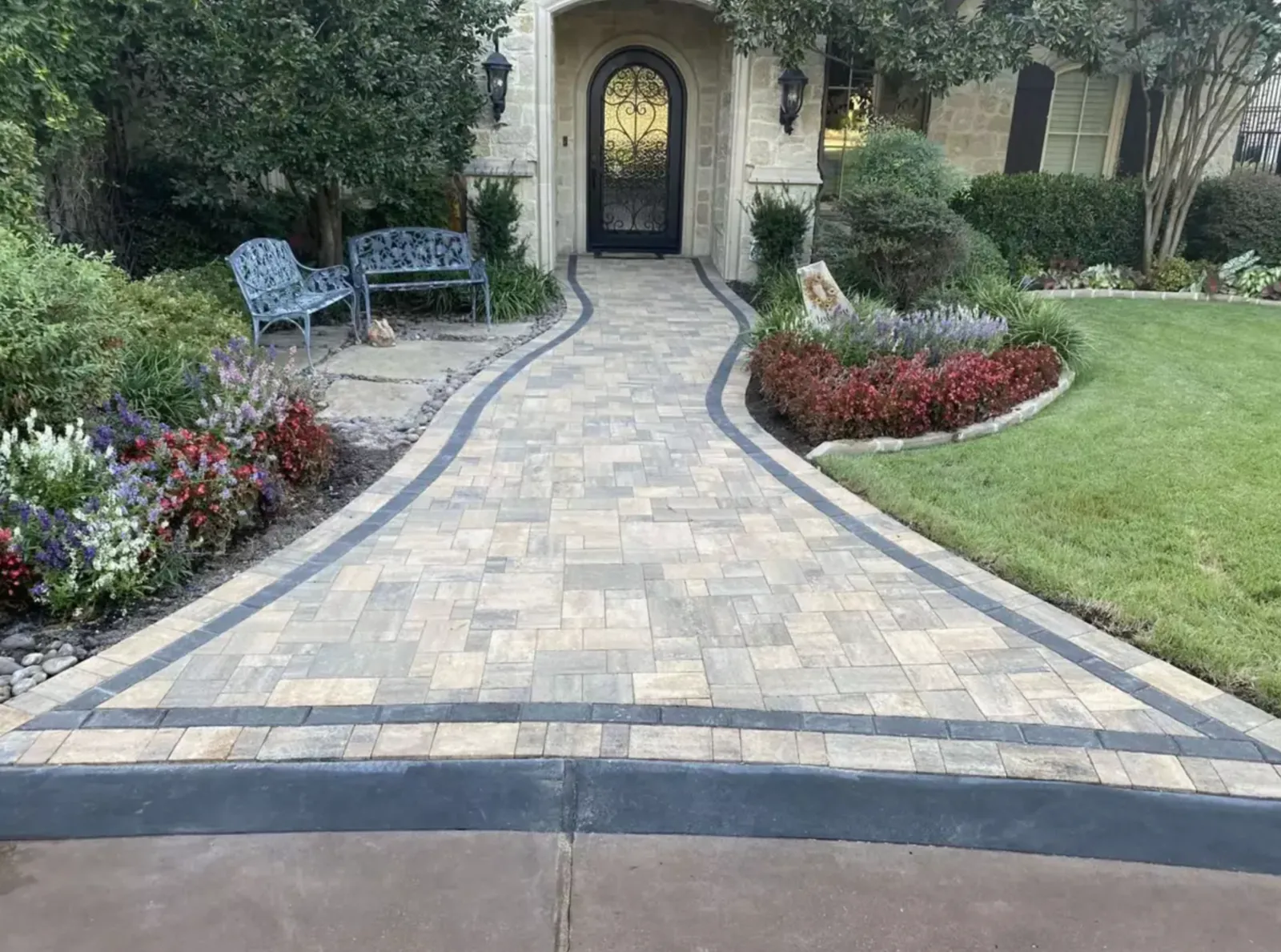
Choose what the walk should emphasize
Decide whether the path should draw attention toward the front door, define a garden edge or provide a quieter connection beside a larger driveway. Describe that goal before choosing a bold pattern or contrasting border.
Study the view from several positions
Look from the street, the driveway and the doorway. Ask how the proposed route and paving read from each position. Check that a design attractive from above also makes sense at the height and angle from which people will normally see it.
Make material choices alongside the house
Compare samples with the porch, brick, stone or siding. Review the field paver and border together. A coordinated palette does not require every surface to match, but the relationship should be intentional.
Preserve the practical route
Discuss door and gate movement, changes in grade and connections to existing surfaces. Share any problems with mud, standing water or awkward shortcuts for the project team to evaluate. Decorative choices should be developed with those conditions in mind.
Plan the surrounding edges
Consider how planting, lawn and lighting meet the walkway. Ask what restoration and finishing are included beyond the paving itself. Bring the complete entry area into the estimate so the project ends at a deliberate boundary.