
Short Answer
How does rainfall affect a retaining wall?
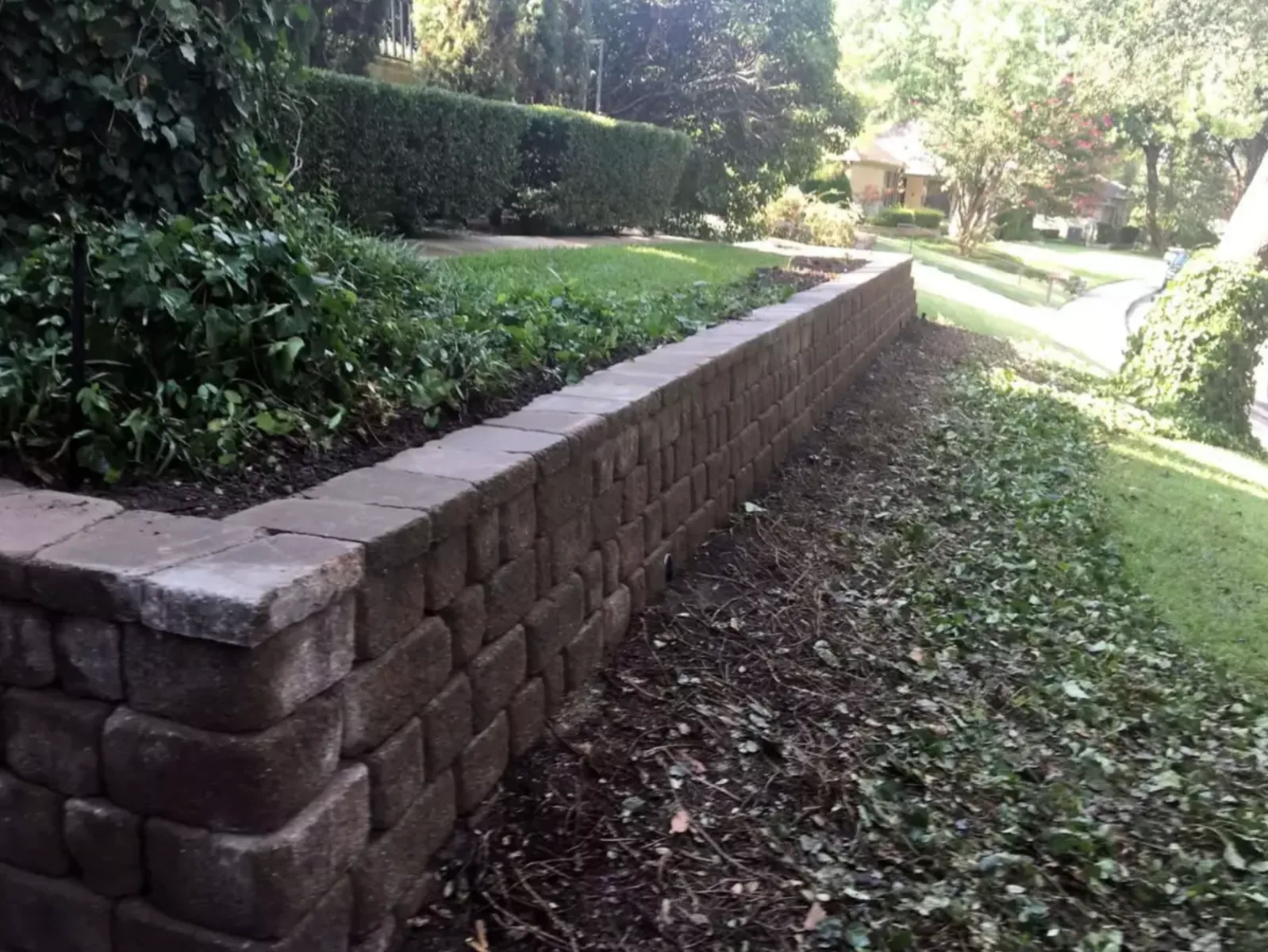
Rainwater can soak into retained soil, collect behind the wall, or concentrate into runoff that carries soil from the top, ends or toe. A retaining wall can support a change in grade, but the wall and the complete water path need to be planned together.
Rain changes the soil and water conditions around the wall
Rainfall can affect a retaining wall in several connected ways. Surface runoff may cross the grade above the wall. Water may infiltrate the retained soil and collect behind the wall. Concentrated flow may also carry soil away at the top, around an end or near the toe. The visible wall face is only one part of that system.
Federal Highway Administration guidance explains that drainage paths are commonly used to keep groundwater from collecting behind earth-retaining structures. The Texas Department of Transportation also directs designers to consider inundation and additional drainage where landscape watering could create excessive hydrostatic pressure. Those sources are written for engineered transportation work, not as a residential construction recipe, but they support the central planning point: water conditions belong in the wall discussion from the start.
Source: FHWA: Soils and Foundations, Chapter 10; TxDOT: Retaining Walls and Reinforced Soil Slopes
Follow runoff from its source to a safe outlet
Begin above the proposed wall. Note roof downspouts, patio edges, irrigation, neighboring slopes, low areas and any channel that becomes visible during rain. Then trace where water appears to enter the retained area and where it could leave without washing out soil or sending runoff toward the home, a neighboring lot or another vulnerable part of the yard.
Photographs taken from an accessible location during ordinary conditions and after rainfall can help show that pattern. Record where water ponds, where soil or mulch moves and how long wet areas remain. These observations help a project team identify what needs further evaluation; they do not establish the hidden cause by themselves.
A retaining wall does not replace a drainage plan
A wall can hold a change in grade and help organize a sloped yard, but it should not be treated as a barrier that simply makes runoff disappear. Water still needs an intentional route. The appropriate combination of surface grading, back-of-wall drainage, outlets and connected site work depends on the soil, wall system, height, surrounding grades and the destination available for discharge.
That is why copying a universal drain layout, base depth or burial ratio from a general article is risky. The design has to respond to the actual yard and the selected wall system.
Check for warning signs after heavy rain
After a significant rain, look from a safe position for new ponding above or below the wall, soil loss, channels cut around the ends, settlement behind the top edge, persistent seepage through the face, shifted units, cracking, bulging or leaning. A single symptom does not identify the cause, and some conditions may call for evaluation by an engineer or another appropriate professional.
If a wall has moved noticeably, if the area above or below it is unstable, or if nearby structures could be affected, keep people away from the concern and seek qualified advice rather than attempting a surface patch.
Have structural requirements established for the actual site
The selected system, wall geometry, soil conditions, slope and nearby loads all influence the design. Ask who is responsible for establishing the foundation, reinforcement, drainage provisions and any required approvals or engineering. A wall beside a driveway, pool, structure or steep grade may raise different questions than a low landscape edge.
The written scope should identify removal, excavation, materials, drainage, access, restoration and the limits of the proposed work. That makes it easier to compare estimates without assuming that two wall proposals include the same preparation or water-management details.
Connect the wall to the outdoor layout
Review the paths, steps, patios, planting and gathering areas beside the proposed wall. The finished arrangement should work as both a grade solution and part of your yard. If a patio or walkway will meet the wall, coordinate finished elevations and water movement before selecting the visible wall face.
Precision Pavers can discuss a retaining wall as a focused improvement or as part of a broader outdoor living plan. Start with the area losing soil, the grade change you need to manage, what you want to use the adjacent space for, and photographs that show the site before and after rain.
Frequently Asked Questions
Rainfall and retaining wall questions
Can a retaining wall prevent erosion after heavy rain?
A retaining wall can support a grade change and may be one part of an erosion-control plan, but it is not a complete drainage solution by itself. The design also needs to address where runoff begins, how water moves at and behind the wall, and where it can discharge without creating another problem.
What retaining wall warning signs should I check after rain?
From a safe location, look for new ponding, soil loss, washout around the ends or toe, settlement behind the wall, persistent seepage, shifted units, cracking, bulging or leaning. These signs do not diagnose the cause, so material movement or unstable ground should be evaluated by an appropriate professional.
Does the same rainfall guidance apply in coastal Texas?
The basic concern—managing surface water, water behind the wall and a safe outlet—applies broadly, but rainfall patterns, soil, groundwater, topography and local requirements vary. Precision Pavers serves North Texas; a coastal Texas property should be evaluated by professionals familiar with that site and jurisdiction.
What should I include when requesting a retaining wall estimate?
Share the address, photographs of the grade and existing wall or slope, where soil is being lost, where water collects, what sits above and below the area, and images taken after rainfall when safely available. Also note nearby patios, steps, driveways, pools, structures or property boundaries that may affect the scope.