
Short Answer
Keep the walking route separate from the things beside it.
Start by moving loose items off the paving. Separate the area into a clear travel route, a planted edge and places to stop or store things. Return only what fits without narrowing the usable path, blocking a gate or forcing you onto the lawn.
Explore walkway design and installation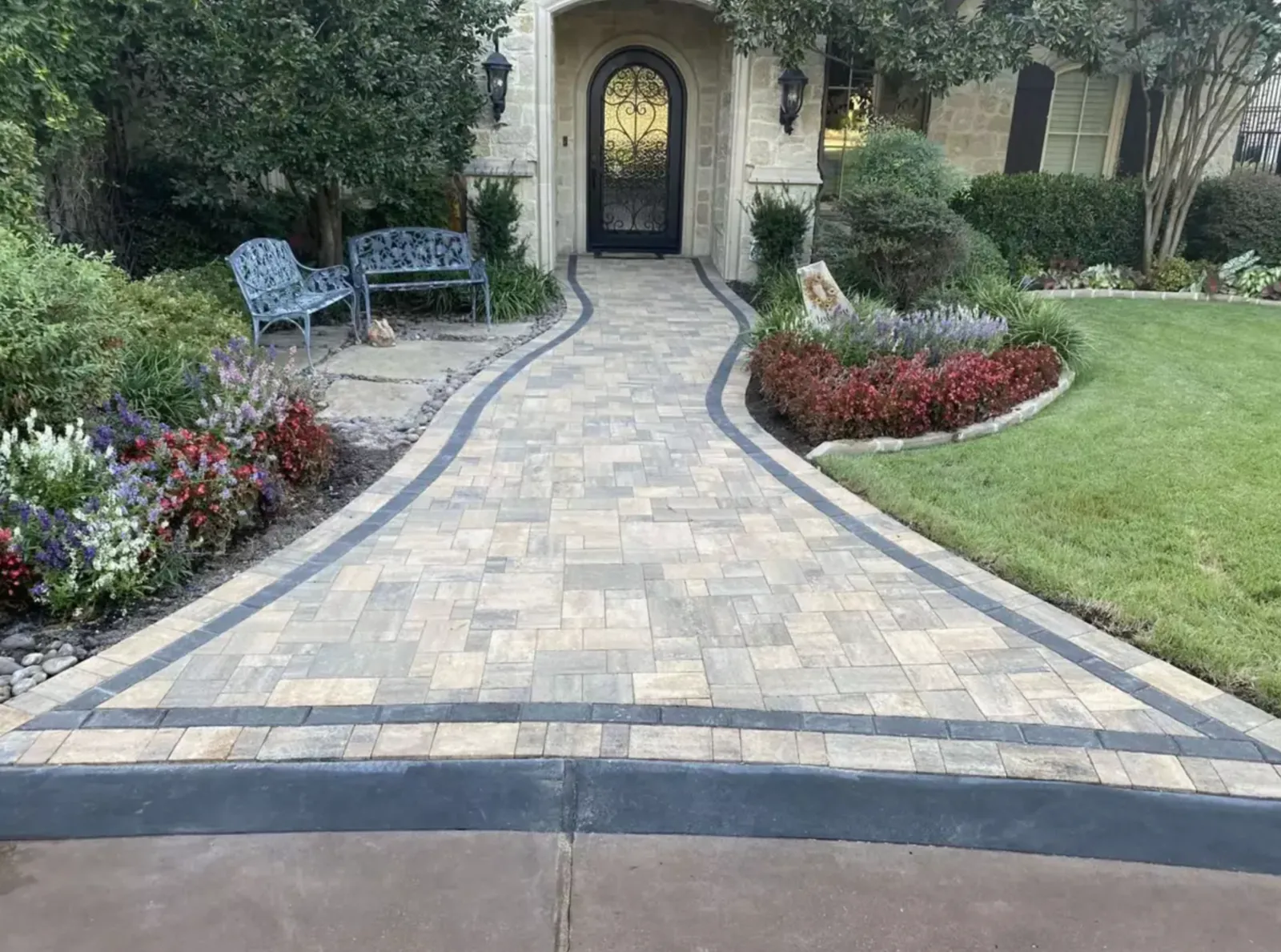
Give everything its place
Three areas to keep separate
- Walking
- Keep the route through the yard open, including turns, thresholds and gate swings.
- Planting
- Let beds frame the walk, allowing room for plants to grow outside the walking surface.
- Pausing & storage
- Set chairs, pots and stored items where using them leaves the route clear.
1. Empty the path before buying more storage
Move portable planters, toys, chairs and loose tools aside, then sweep away leaves and spilled soil. Leave fixed lighting, utility equipment and installed paving in place. Walk the cleared route with the things you normally carry: groceries, a laundry basket or garden supplies.
Notice where you still turn sideways, leave the paving or struggle to pass another person. If the cleared walk works well, the first solution is organization. If the same pinch point remains, putting a storage box beside it will not create more walking room.
2. Give everyday items a permanent home
Store a hose near its point of use so it can be put away without crossing the walk. Keep garden tools and toys in storage reached from the yard or patio rather than in a box that projects into a turn. Choose a bin location with room to open the lid and remove its contents.
Place seating where both the chair and a seated person’s feet can stay outside the travel route. Group pots in a planting pocket or on a generous landing only if they leave the approach and door movement clear. Try the arrangement with the door or gate fully open before calling it finished.
For example, if two pots and a bench crowd the approach to your porch, first try grouping the pots beside a bed and moving the bench to an adjoining sitting area. Test that arrangement before deciding you need a wider walk. This is a layout exercise you can try at home, not a reason to add more paving automatically.
3. Keep planting and decoration behind the edge
Look beyond a plant’s size on the day you buy it. Allow for its mature spread so foliage does not gradually take over the walking surface. Avoid thorny or sprawling plants immediately beside a route where people will brush against them. NC State Extension’s walkway collection highlights that distinction between framing a path and obstructing it.
Use a few repeated pots or planting groups rather than filling every gap along the paving. Keep decorative objects and portable lights outside the usable route. Leave room to tend the planting without storing watering cans, bags or tools on the walk.
4. Measure the room you actually have to walk
Measure between the nearest obstructions, not just from one paving edge to the other. A wide paved surface can still feel cramped when a pot, hedge or chair occupies part of it. Check turns and the approach to steps as well as the straight section.
NC State Extension recommends roughly 4½ to 5 feet for a main path used by two people side by side. Treat that as a landscape-planning reference, not a universal requirement. Your household’s mobility needs, equipment, gates, slopes and applicable requirements need to inform the actual design. Do not shrink a needed access route to make room for decoration.
5. Separate clutter problems from paving problems
Rearranging furniture cannot correct a rocking paver, an uneven transition or recurring standing water. Keep those concerns separate from your decorating decisions and have the cause assessed before choosing a repair or replacement. After rain, photograph where water collects or crosses the walk; do not use a row of pots or a storage box to divert it.
For your North Texas home, compare the cleared route in everyday use and after rainfall. If it remains too narrow, ends awkwardly or competes with a sitting area, a revised walkway layout may be worth discussing. Keep the parts that already work and focus the changes on the actual obstruction.
Precision Pavers serves Celina, Frisco and surrounding North Texas communities. If your walkway needs more than a tidy-up, our team can discuss a new route or connections to your entry, patio and garden.
Frequently Asked Questions
Organizing your walkway
How do I organize a narrow walkway?
Remove movable items first and measure the clear space left between obstructions. Put storage, pots and seating beside the route where they fit, and test door and gate movement. If the empty path still does not meet your household’s access needs, discuss a layout change rather than adding more objects along its edges.
Can I put planters or a bench beside my walkway?
Yes, if they fit outside the space needed for walking, passing and opening doors or gates. Include the mature spread of plants, a seated person’s feet and access for care. A separate planting pocket or sitting area can work better than placing objects on the paving.
Will organizing my walkway fix puddles or uneven pavers?
Moving clutter can free up the route, but it does not correct grades, supporting construction or a drainage problem. Record what you see and have the cause assessed before deciding on repair or replacement. Do not redirect water with furniture, containers or improvised barriers.