
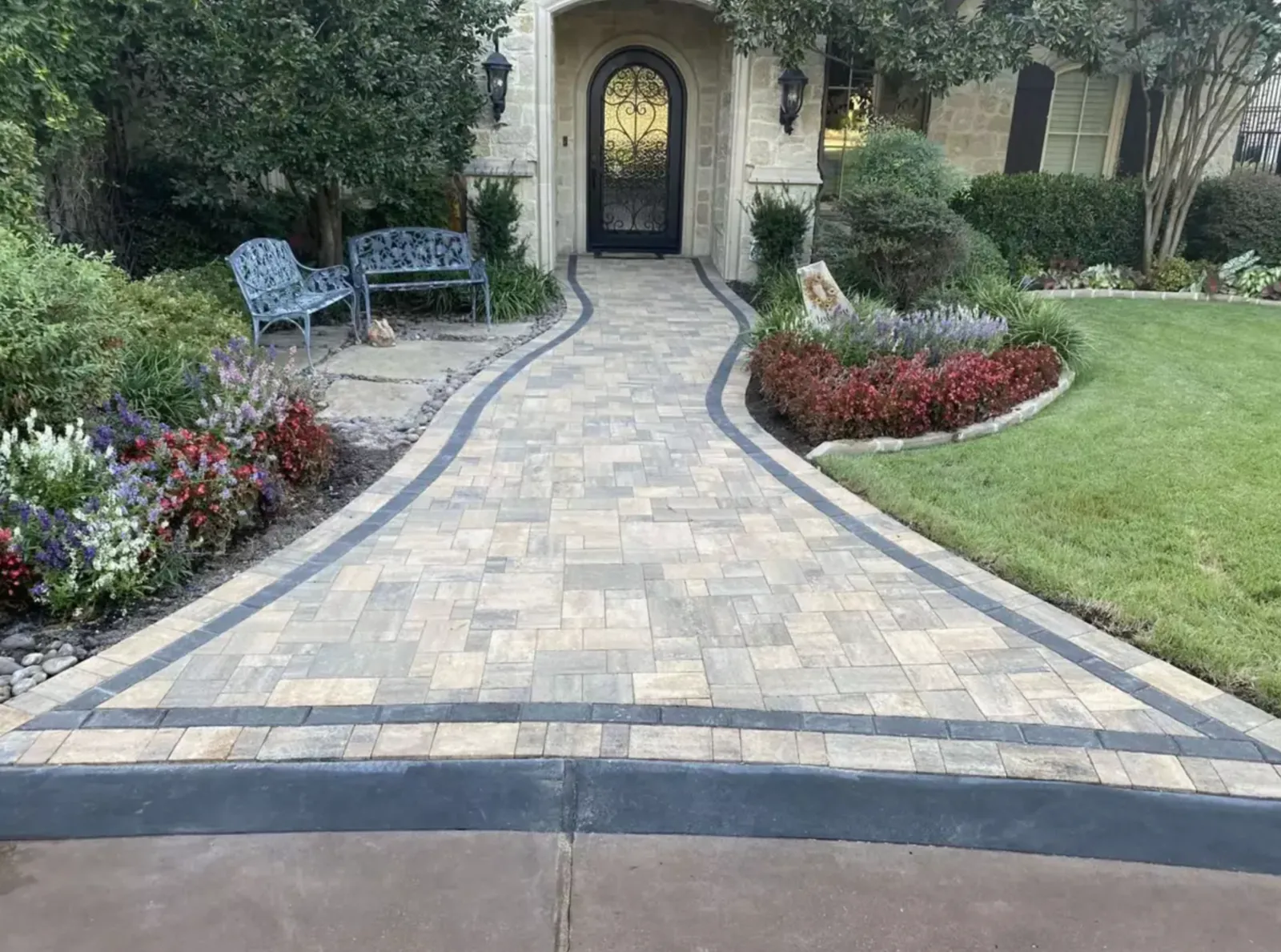
Three pattern directions
- A straight, repeated layout emphasizes the route and can suit a simple approach to a door.
- A contrasting border defines the edge and can connect the path visually to a patio or drive.
- A more varied field pattern creates texture, which is best judged across a larger sample rather than one unit.
These are design directions, not structural specifications. The available patterns depend on the selected product and the proposed layout.
Let the route shape the drawing
Begin with the places the path connects. Doors, gates, steps, furniture and garden access establish the movement it must serve. Then evaluate curves, width and edge treatment within those constraints. Include the people and equipment that need to use the route.
Connect the finish to installation
Paving performance depends on the complete assembly, including supporting construction and edge details. CMHA’s application guide treats those components together. Appropriate preparation and installation help address movement and other risks, but cannot promise a fixed service life or eliminate all future repair.
Make the selections easy to review
Keep the route, product, pattern and border on the current plan. The estimate should identify removal, preparation, installation and disturbed-area restoration. At handoff, retain care information for the actual materials. Precision Pavers can discuss a walkway that connects naturally with the rest of your outdoor space.