
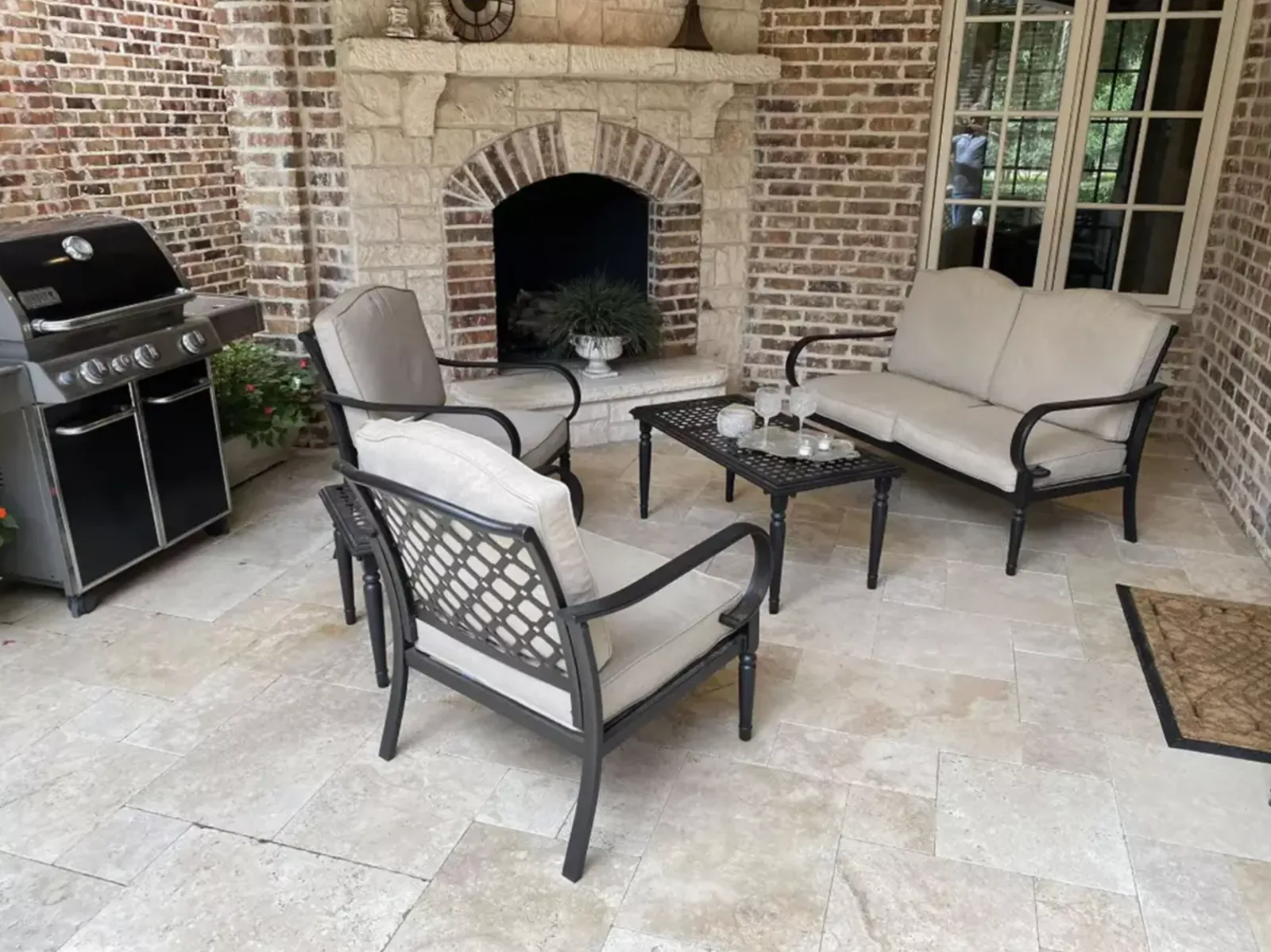
Start by identifying what is actually failing
Walk the patio after a rain and again when it is dry. Mark pavers that rock, dip, spread at the edges, lose joint sand, hold water, or create an abrupt transition at a door, step, lawn, or pool deck. Also note what is not a construction failure: a patio can be structurally sound yet too small for the table, disconnected from the grill, visually dated, or poorly aligned with a new outdoor kitchen.
The symptoms shape the remodel. A small settled area may call for localized lifting and base correction. Widespread waves, recurring washout, failed edges, or an elevation that directs water toward the home can point to a broader rebuild. If roots, downspouts, irrigation, or another hardscape feature affect the area, those conditions need to be considered before the surface is reset. Covering a visible problem without addressing its cause usually preserves the problem underneath.
Decide what to keep, lift, and replace
Sound pavers may be reusable when enough matching units can be recovered without excessive chipping and the new layout works with their size, thickness, color variation, and pattern. Reusing them can preserve a material you already like, but it still requires careful removal, sorting, cleaning, and enough spare pieces for cuts and breakage. Sun exposure and age can also make a new production run look different beside the original field.
A remodel can take several forms: lift and relay the existing surface over corrected base material; replace only damaged or stained units; introduce a new border that deliberately separates old and new pavers; expand the footprint with a compatible material; or rebuild the patio with a new finish when the old pavers or layout no longer serve the plan. Ask for the keep-and-replace areas to be shown clearly in the written scope.
Rebuild the patio in the right order
Once the scope is defined, a typical remodel starts with careful removal and staging of any pavers that will be reused. The exposed area can then be evaluated for soft spots, erosion, inadequate edge support, and grade. Necessary base corrections happen before bedding material, pavers, cuts, borders, edge restraint, and joint material are reinstalled.
That sequence matters if the patio is also changing shape. Set the finished footprint around furniture dimensions, door swings, cooking clearances, walking routes, shade, and the connection to the yard. Coordinate electrical, gas, irrigation, drainage, lighting, a pergola, or an outdoor kitchen before the final paver field is placed. A larger surface is only an improvement when people can move through it comfortably and water still has a responsible route away from the home.
Do not treat new joint sand as a structural repair
Fresh joint material can finish a stable patio after joints have been properly cleared and the pavers are secure. It does not level a sunken area, rebuild a washed-out base, correct a loose edge, or solve water moving through the wrong place. Placing new polymeric sand over loose, contaminated, or partially filled joints can also prevent the product from reaching the depth and clean contact conditions required by its manufacturer.
The same caution applies to installing new pavers directly over an old paver patio. The added height changes door thresholds, steps, edges, drainage, and adjoining surfaces, while any movement below remains in the assembly. A contractor should evaluate the existing construction and elevations before recommending an overlay instead of removal and rebuilding.
Compare remodel estimates by scope, not square footage alone
The cost to redo a paver patio depends on how much material can be reused, the condition below the pavers, demolition and hauling, access, drainage or grade corrections, patio size and shape, cuts, borders, steps, lighting or utility coordination, and the new material selected. An expansion with clean access may be simpler than carefully lifting, sorting, and matching a detailed older pattern, even if the square footage is similar.
Ask each proposal to separate removal, material reuse, base and bedding work, new pavers, edges, joint treatment, transitions, cleanup, and any related outdoor features. Also ask how concealed conditions or plan changes will be handled. That makes it easier to compare whether two estimates solve the same problems instead of simply choosing between two totals.
Plan the finished patio for daily use and future phases
Before approving the new layout, place the dining table, lounge seating, grill, planters, and walking paths on a scaled plan or mark them on the patio. Check the view from inside the home, the route from the kitchen, the approach to the pool or lawn, and the space needed to pull out chairs. If a future fireplace, kitchen, pavilion, or landscape renovation may connect to the patio, protect that connection now.
After the remodel, follow the care instructions for the selected paver and joint system. Keep soil and mulch from building up against the edges, clear debris from drainage paths, use compatible cleaning methods, and investigate new settlement or recurring joint loss before it spreads. A thoughtful remodel should leave you with a patio that looks renewed, drains intentionally, and fits the way you actually spend time outside.
Frequently Asked Questions
Paver patio remodeling questions
Can you remodel an existing paver patio?
Yes. Depending on the condition, a remodel may involve lifting and resetting pavers, correcting the base, replacing damaged units, changing the border or pattern, expanding the footprint, or rebuilding the entire surface. The first step is identifying why the patio is uneven, undersized, dated, or no longer functional.
How much does it cost to redo a paver patio?
There is no reliable square-foot answer without seeing the existing conditions. Reuse and removal, base repairs, access, grade and drainage, size, pattern, cuts, borders, steps, utilities, and new material choices all affect the scope. A written estimate should identify those items separately.
Can I put new polymeric sand over old joint sand?
Do not assume a thin new layer will correct failed joints. Loose or contaminated material may need to be removed to the depth and cleanliness required by the selected product, and the pavers should be stable first. Follow the joint-material manufacturer's instructions for preparation, weather, compaction, and activation.
Can new pavers be installed over old pavers?
An overlay is not automatically a sound shortcut. Added height can create problems at doors, steps, drains, edges, and adjoining surfaces, and movement in the existing patio can remain underneath. Have the existing base, elevations, and water path evaluated before choosing an overlay.
Can old pavers be reused during a remodel?
Often, yes, if the units can be lifted in usable condition and their size, thickness, quantity, and appearance work with the new design. Plan for some loss from cuts or breakage and review how any new pavers will transition to weathered material.
How long does a paver patio remodel take?
Timing depends on the patio size, access, demolition, amount of material being reused, base or drainage corrections, new features, material availability, weather, and any approvals. A dependable schedule follows a site review and a defined scope.