
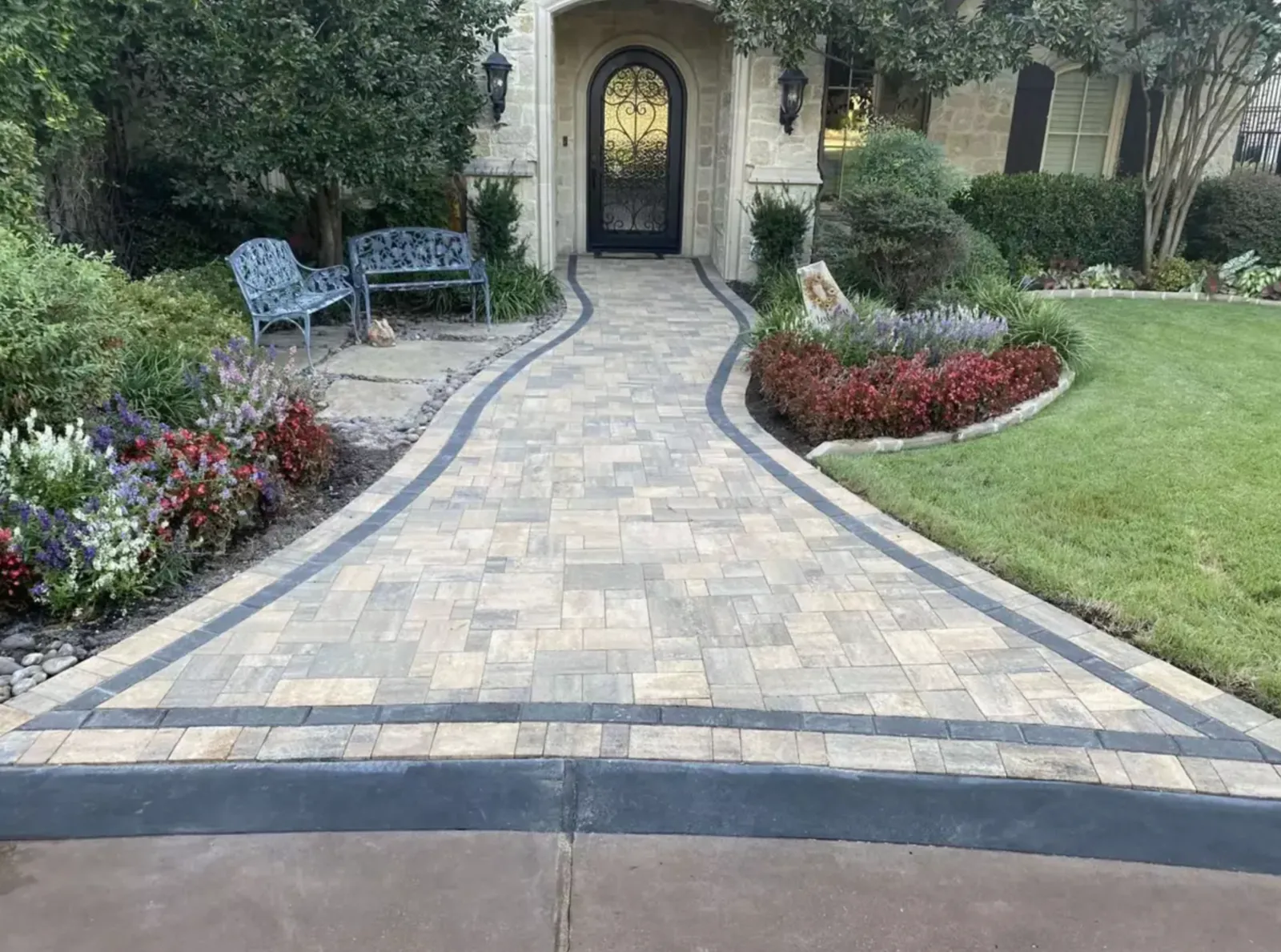
Follow an ordinary trip through the yard
Walk from the door to the places you use most. Note where people leave the existing pavement, cut across the lawn or change direction around furniture. Share those observations with the designer so the proposed route answers a real need.
Look at both ends of the connection
A path should meet the door, gate or patio as deliberately as it crosses the yard. Discuss the finished transitions, space to open gates and how the route relates to nearby steps. Ask the project team to assess grades and water movement at those connections.
Choose a finish in context
Compare the paving sample beside the house and existing hardscape. Decide whether the path should blend into the setting or read as a distinct feature. Ask about the selected product and its care guidance rather than assuming every paving material has the same needs.
Review the plan with daily objects in place
Consider a garden cart, outdoor furniture and the items you regularly carry along the route. Discuss those uses while dimensions are being established. If lighting is part of the plan, identify when and how you use the path after dark.
Start with your route and photographs
Send Precision Pavers the property location and pictures showing both ends of the proposed path. Include what feels awkward today and which connections you want to improve. That gives the first conversation a practical starting point.