
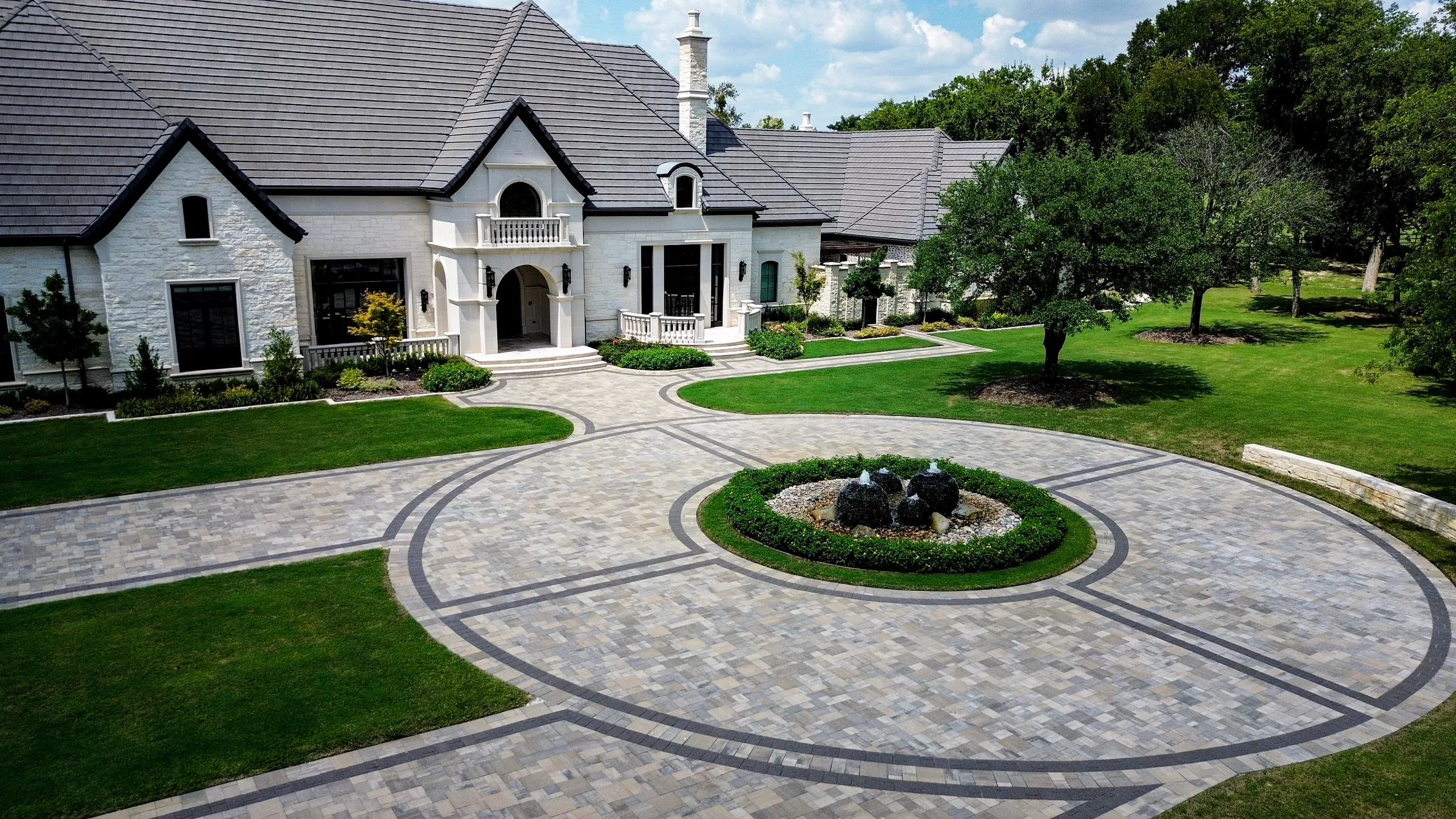
Describe the vehicles and movements
Tell the designer about everyday vehicles, deliveries, trailers and any heavier equipment expected to use the drive. Include turning, parking and access needs. A photograph of a finished driveway does not establish what loads its construction was designed to carry.
Evaluate the site and existing surface
Share known problems such as settlement, standing water or broken edges. Have the project team assess the existing construction and ground conditions as appropriate. The suitability of a proposed paving assembly depends on more than the appearance of the top layer.
Specify a complete system
Ask who determines the paver product, preparation, base, bedding and edge details for the actual use. Manufacturer guidance, applicable requirements and qualified design input should inform the proposal. A universal base thickness from an article cannot cover every soil or vehicle.
Review transitions and water movement
Discuss the garage entrance, street connection, adjacent walkways and any drainage features. Have the layout and grades considered together with vehicle movement. Keep the proposed construction and any assumptions identifiable in the estimate.
Keep the design and care documents
Request relevant product information and care guidance at handoff. If the intended vehicle use changes later, have the driveway assessed before assuming it supports the new demand. Precision Pavers can discuss the intended use and next steps for your property.