
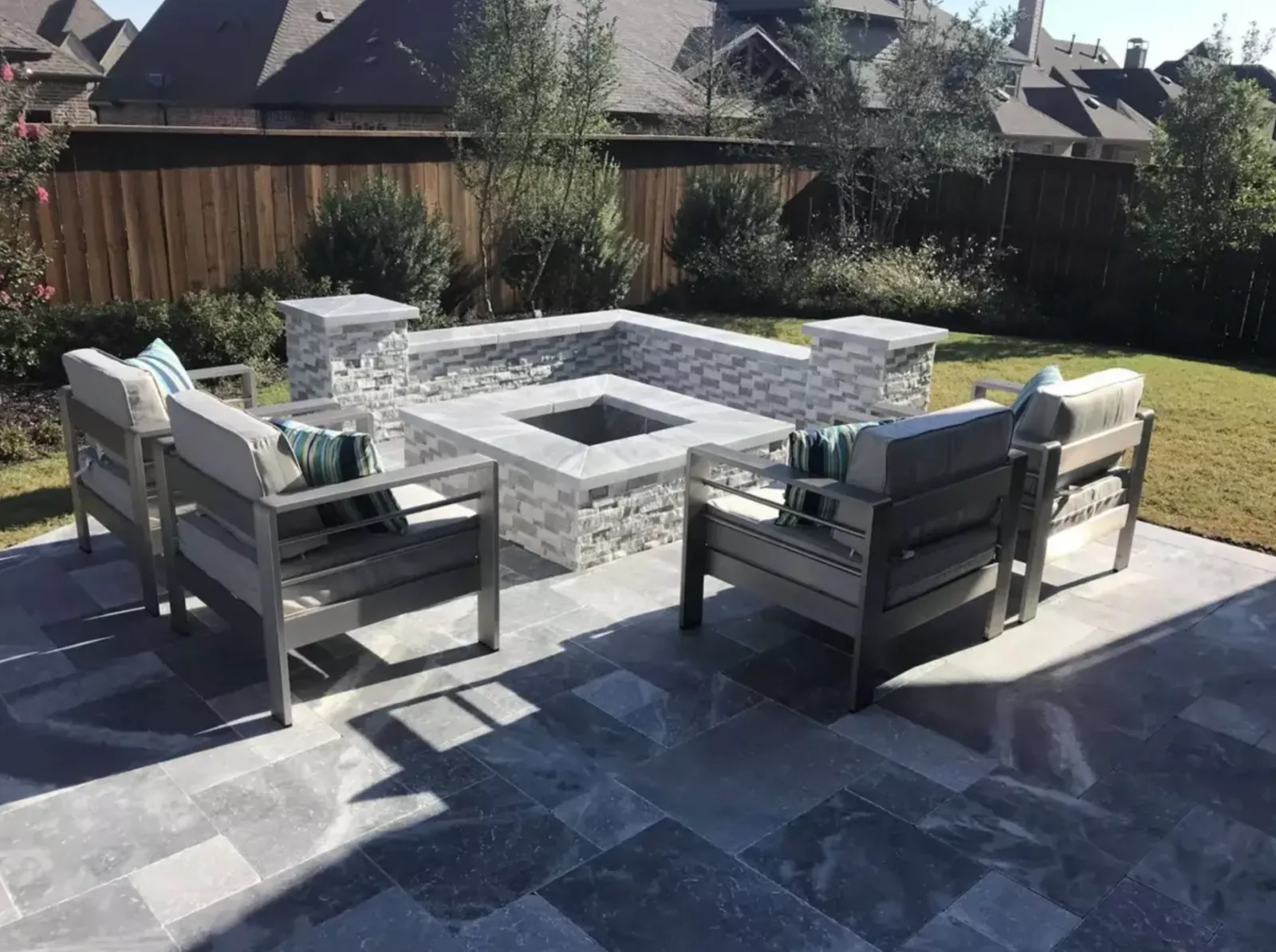
Two ways to make the outdoor floor
A paver patio uses individual units arranged in a field and border. A poured concrete patio uses a placed slab with its specified finish and joint layout. Concrete pavers are themselves concrete products, so this is a comparison of construction systems as well as appearance.
Pavers offer visible joints and modular pattern choices. A poured surface offers a different visual continuity and can include decorative finishes. Compare larger samples and layouts with the house rather than treating either choice as automatically more attractive.
Look below the finish
Existing ground, drainage and the supporting construction affect either option. The proposals should describe removal, preparation, transitions, edges and the treatment of water. A flexible-looking paver layout does not mean settlement or movement can be ignored.
Ask the contractor to explain how the assembly suits the actual site and intended use. The material name alone does not establish durability or a fixed lifespan.
Compare the care and repair approach
Cleaning and any surface treatment should follow the selected product guidance. Paver joints and edges also need appropriate care. A damaged unit or local area may be repairable separately, while the repair approach for a slab depends on its condition and the cause of damage.
Neither system is maintenance-free. Keep matching material availability, access to the affected area and the appearance of a future repair in the comparison.
Choose with the whole price in view
Compare equal work limits and written inclusions: removal, preparation, surface, borders, drainage and restoration. A lower initial quote may cover a different scope. Future cost and resale return cannot be guaranteed by choosing one category.
Precision Pavers can discuss the paver option around the way you intend to dine, relax and move through the yard.