
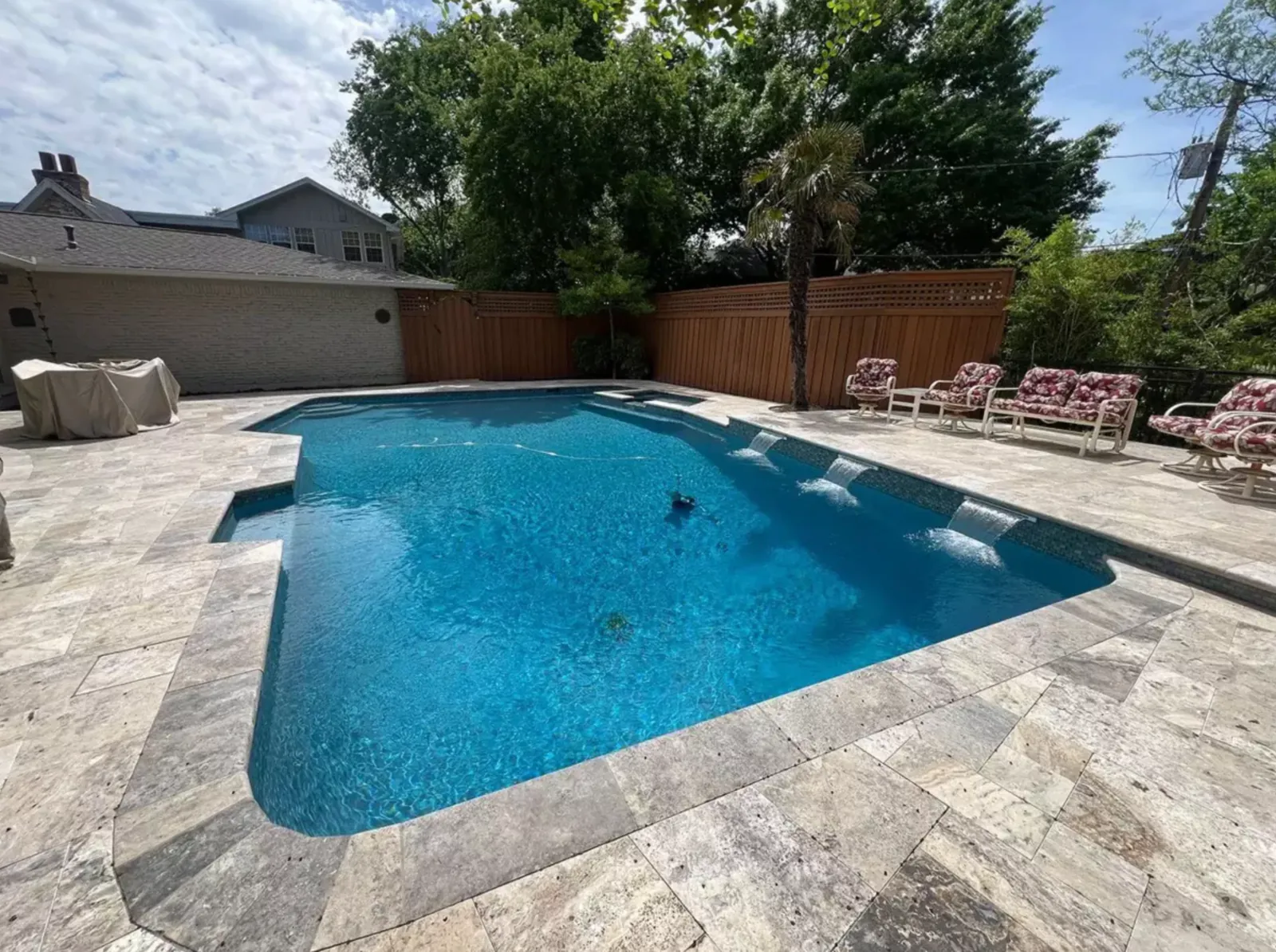
Appearance and connections
Paver patterns can give the deck a modular rhythm and a distinct border. A poured surface offers a different composition. Either option needs deliberate connections to coping, doors, drains and surrounding paths. Review those details with the whole pool area in view.
Comfort and wet conditions
Temperature and traction depend on the selected product, finish and conditions. Neither the word “paver” nor “concrete” establishes how a particular wet surface will perform. Request the manufacturer’s information for the actual finish and discuss poolside suitability with the project team.
Shade and the way people move between the house, furniture and water also matter. No pool-deck finish eliminates slip risk, and a broad material label cannot guarantee comfortable bare feet in strong sun.
Care and repair
Cleaning, joint care and treatment requirements vary by product and construction. CMHA describes localized repairs for some interlocking pavement defects, including lifting units and addressing the cause before reinstatement. That can be useful when comparing repair approaches, but it is not a universal lifespan or cost advantage.
Choose from a defined scope
Compare removal, preparation, finish, drainage, transitions and restoration in the estimate. Keep written product and installation coverage separate so their terms are understandable. Precision Pavers can discuss the proposed paver deck in relation to your existing pool and intended use.