
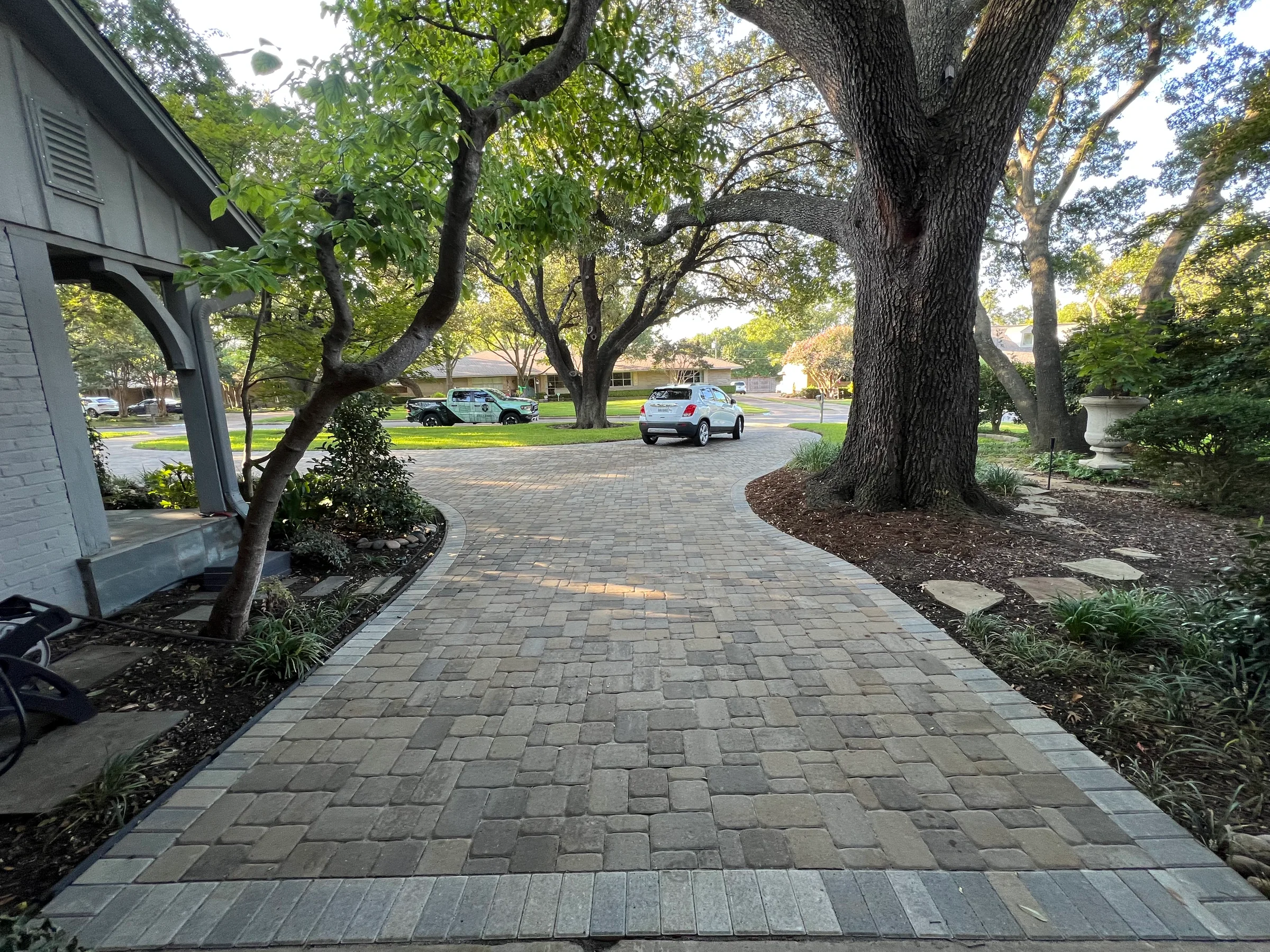
What problem should the walkway solve?
Start with function. Is the current route muddy after rain, too narrow for comfortable use, uneven, disconnected from the driveway, or simply in the wrong place? A front-entry walk has different priorities than a side-yard connection, garden path, or route to a pool and patio.
Think about the people and equipment that will regularly use it. Everyday foot traffic, strollers, garden carts, trash bins, gates, steps, and furniture moves can all affect the width and alignment worth discussing. If people already cut across the lawn along a particular line, include that in the walk-through rather than forcing a route that looks attractive on paper but feels inconvenient in daily life.
What details shape a walkway estimate?
A walkway estimate is more than a price per square foot. The route's length and width matter, but so do curves, steps, removal of an existing surface, access for materials, grade changes, edge conditions, drainage work, and the number of detailed cuts. Material choice, pattern, borders, and transitions to the porch, driveway, gate, patio, or lawn also change the scope.
Before the visit, gather a few practical details:
- Photos from both ends of the proposed route
- Rough measurements and the preferred start and end points
- Areas where water collects or soil has settled
- Known irrigation lines, utilities, gates, or tight access
- HOA requirements or timing constraints that may apply
A site review is what turns those inputs into a defined project. It also gives you a better basis for comparing proposals: the same surface material can produce very different estimates when preparation, access, drainage, and finish details are not equivalent.
Why do drainage and ground conditions deserve an early conversation?
Celina's stormwater system is part of a larger network that moves runoff toward local waterways, and each property still needs a sensible plan for water at the surface. A new walkway should not create a low edge that traps water, push runoff toward the house, or block an existing drainage path.
North Texas soil movement also makes preparation important. During the walk-through, point out ponding, washout, recurring weeds in joints, lifted edges, cracks in adjacent concrete, or sections of the yard that stay soft after rain. Those signs do not prescribe one solution, but they help frame questions about excavation, base preparation, slope, edges, and how the walkway will meet nearby surfaces.
How should materials and layout be compared?
Compare options against the route's actual use, not a sample viewed by itself. Ask how the color and texture will relate to the house, driveway, patio, and landscape. Discuss traction, surface comfort, border treatment, joint appearance, repairability, and the maintenance expected for each material under consideration.
Layout matters just as much as the unit itself. Straight lines can reinforce a formal entry, while a controlled curve can navigate planting beds or soften a garden route. Changes in elevation may call for steps or a different alignment. The goal is a walkway that feels intentional from both directions and makes clean connections at every threshold.
When should a Celina homeowner start the scheduling conversation?
There is no single lead time that fits every walkway. Scheduling can depend on the final design, material availability, site access, weather, approvals, and whether the walkway is one part of a larger front-yard or outdoor living project. If the work needs to be complete before travel, an event, landscaping, or another contractor arrives, share that date at the first conversation.
Also ask what needs to happen before installation can be scheduled. A defined scope, selected materials, property access, utility awareness, HOA review when applicable, and coordination with irrigation or landscape work can all influence a realistic sequence.
What should you ask during the property walk-through?
Use the visit to make the proposal easier to understand. Ask what is included in removal and preparation, how grade and runoff will be addressed, where materials can enter the property, how existing surfaces will be protected, and what happens at the edges and thresholds. Confirm which material, pattern, border, and dimensions the estimate assumes.
Before booking, ask how routine care differs by material and what signs deserve attention later. Keeping debris and soil from building up, watching for settlement or loose edges, and addressing drainage changes early can help a walkway remain easier to use. Cleaning methods, joint care, and any sealing decision should follow the selected product and installation details rather than a one-size-fits-all schedule.
Frequently Asked Questions
Celina walkway planning FAQs
Does Precision Pavers install walkways in Celina?
Yes. Walkways are an approved Precision Pavers service, and Celina is within the company's listed North Texas service area. Share the property address and project details to confirm the current scheduling fit.
How much does a walkway cost in Celina?
The estimate depends on dimensions, material, pattern, borders, curves or steps, existing-surface removal, access, grade, drainage, base preparation, and transitions to nearby surfaces. A property review is needed to define those variables before pricing.
What should I send before requesting a walkway estimate?
Send the Celina property address, photos from both ends of the route, rough dimensions, the surfaces the walkway should connect, any drainage or settlement concerns, access details, and your preferred timing.
Can a walkway be planned with a larger outdoor project?
Yes. A walkway can be considered alongside a patio, driveway, front-yard renovation, garden path, steps, lighting, drainage details, or another connected outdoor living improvement so the routes and materials work together.