
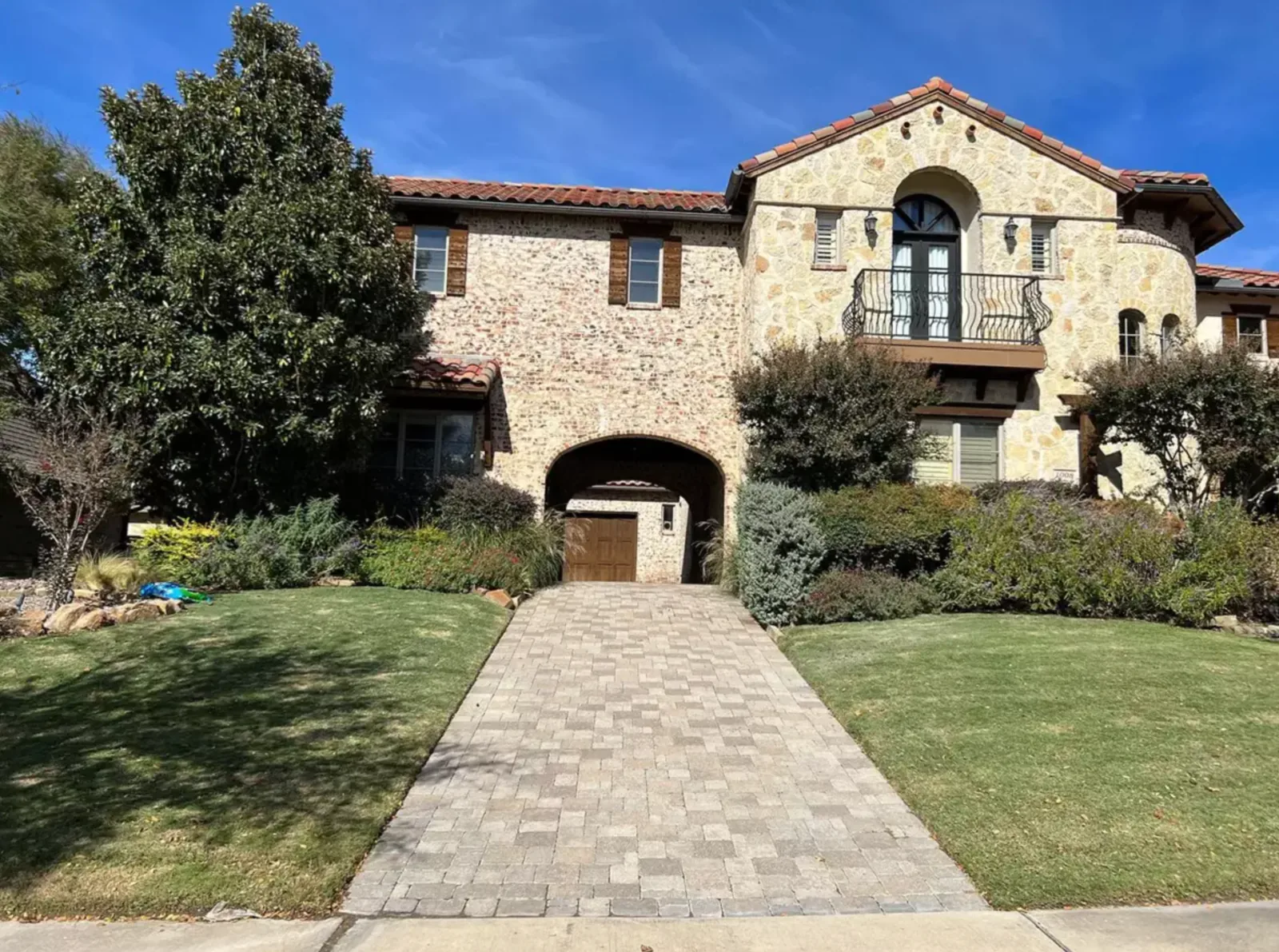
1. Where should the walkway begin, end, and change direction?
Start with the trip, not the paver sample. A front walk may need to connect the driveway, sidewalk, porch, and guest parking without sending visitors through a planting bed. A side-yard route may need to clear a gate, utilities, bins, irrigation equipment, and the path used for yard maintenance. A backyard walk may need to connect a patio, pool, garden, or outdoor kitchen without interrupting furniture or play space.
Walk the route both ways and notice where people naturally turn, pass one another, carry groceries, or pause at a door. Ask whether the proposed width fits those movements and whether a straight line, controlled curve, landing, or step makes the transition easier. Defining the route first gives every later material and pricing decision a useful reference point.
2. Who controls the surface and what should be confirmed before work begins?
A private path inside the property is not the same as a public sidewalk near the street, a shared HOA walkway, or work inside an easement. Before authorizing construction, confirm where the property line falls and whether HOA documents, utility access, or City requirements apply to that part of the route. The property survey and the appropriate HOA, utility, or City of Celina contact are the right starting points when ownership or approval is unclear.
This distinction also matters when an existing surface is damaged. Do not assume the city, HOA, contractor, or homeowners insurance will automatically pay for repair. Responsibility and coverage depend on the location, governing documents, policy, and cause of damage. Settle those questions with the responsible organization or insurance carrier before treating potential reimbursement as part of the project budget.
3. What happens to water along this route during a heavy rain?
Celina's public stormwater information emphasizes that runoff moves through a connected local system. On an individual property, that makes water movement an essential design input. Show the estimator where downspouts discharge, soil washes out, mulch moves, water ponds, or the ground stays soft after a storm. A dry-day appointment can miss the condition that matters most.
Ask how the finished walkway elevation will meet the porch, driveway, lawn, beds, gates, and nearby drains. The proposal should make clear whether drainage-related work is included, excluded, or needs separate evaluation. A walkway should not be positioned as a complete drainage solution unless the larger water path has actually been assessed.
4. What preparation and edge details are included below the finished pavers?
The visible pattern is only one part of the installation. Excavation, base preparation, slope, edge restraint, joint treatment, transitions, and disposal can all affect scope. Ask each contractor to describe these items in writing rather than relying on a broad phrase such as “standard installation.”
Also point out settlement, rocking units, loose borders, recurring joint loss, exposed roots, cracked adjoining concrete, or erosion around the current route. Those conditions may indicate different causes and different repair options. The useful question is not simply whether a section can be made level; it is what the proposed work is intended to correct and which nearby conditions remain outside the quote.
5. Does the material suit the route as well as the home?
Color and pattern matter, but so do scale, surface texture, joint appearance, traction, cleaning, repairability, and possible sealing needs. View the selection beside the home and the surfaces it will meet. Then ask to see how the pattern and border work across the actual walkway width. Narrow runs, tight curves, steps, and detailed transitions may create more cuts than a large sample area suggests.
Consider the long view as well. If a later phase may add a patio, driveway border, front-yard renovation, landscape lighting, or outdoor living area, the new walk should not make that connection unnecessarily difficult. A coordinated alignment and restrained material palette can help separate projects feel intentional when they are completed at different times.
6. Can you compare the complete quote instead of one headline number?
A useful walkway proposal identifies the approximate route and dimensions, material and pattern, border and joint treatment, removal and hauling, base and edge work, transitions, access assumptions, landscape protection, drainage-related work, and exclusions. Curves, steps, detailed cuts, narrow access, staging distance, demolition, and coordination with irrigation or other trades can change the work even when two walkways have similar square footage.
That is why a 20-foot or 30-foot length does not produce a reliable price by itself. Ask what could change the quoted scope after work begins and how changes would be documented. Comparing the same categories across proposals is more informative than choosing the lowest total before understanding what it includes.
7. What has to happen before the installation date is dependable?
Scheduling should follow material selection and a defined scope. Product availability, weather, property access, utility awareness, applicable approvals, demolition, and coordination with irrigation, landscape, concrete, or lighting work can affect sequence. If the project needs to be complete before travel, an event, or another contractor arrives, share that date during the estimate and ask which dependencies could move the schedule.
Before booking, also ask what routine care fits the selected surface and joint system. Keeping soil and mulch away from edges, clearing runoff paths, controlling plant growth, using compatible cleaning methods, and watching for new settlement or loose units can help homeowners spot changes early. There is no single replacement calendar for every walkway; condition, water movement, use, installation, and maintenance provide better guidance than age alone.
Frequently Asked Questions
Walkway booking questions for Celina homeowners
Does Precision Pavers install walkways in Celina, TX?
Yes. Walkways are a listed Precision Pavers service, and Celina is within the company's North Texas service area. Share the property address, proposed route, current conditions, and timing goals so the team can discuss the project.
How much does a walkway cost in Celina?
A useful estimate depends on width and length, material, pattern, borders, curves or steps, demolition, hauling, access, grade, drainage, base preparation, cuts, and transitions. Square footage or length alone cannot define the complete scope.
Do I need approval before replacing a walkway?
Approval depends on the exact location and property rules. Review the property survey and applicable HOA documents, and contact the appropriate City of Celina or utility representative when work may involve a public sidewalk, easement, shared area, or utility access.
Should drainage be discussed during a walkway estimate?
Yes. Point out downspouts, ponding, washout, soft soil, low areas, and the direction water moves during storms. Ask how the proposed elevation meets adjacent surfaces and whether any drainage-related work is included or excluded.
Will homeowners insurance pay for a damaged walkway or sidewalk?
Coverage depends on the policy, cause of damage, ownership, and other claim details. Ask the insurance carrier about the specific condition before assuming repair or replacement will be covered.
What should I bring to a Celina walkway consultation?
Bring the property address, photos from both ends of the route, rough dimensions, the surfaces to be connected, notes about water or settlement, gate and access details, known HOA or utility considerations, and any future project that may connect to the walkway.