
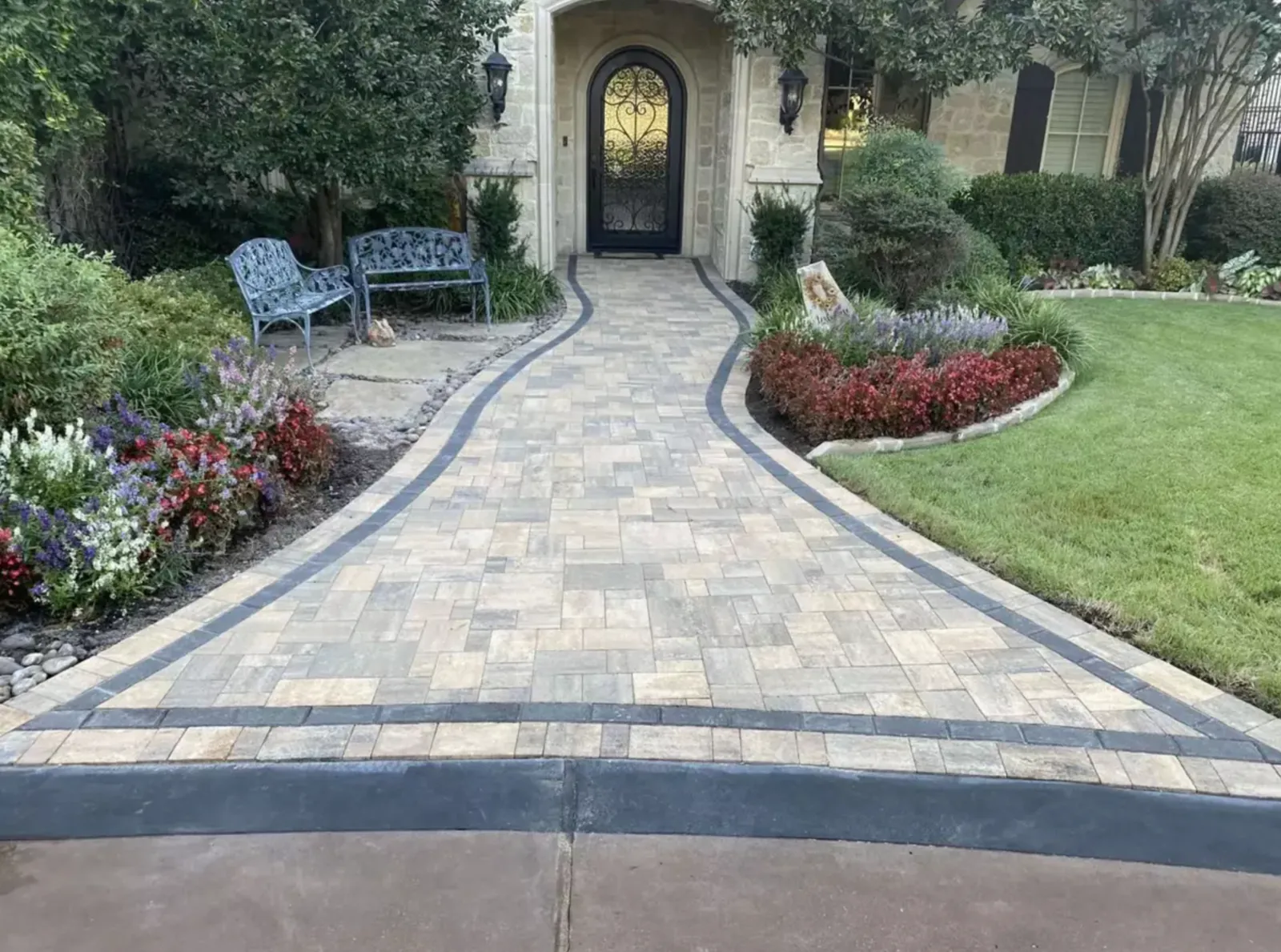
1. Which route will make the property easier to use?
Begin with the trips people already make: driveway to front door, gate to backyard, patio to pool, or porch to garden. The shortest line is not always the best line if it crowds a planting bed, meets a gate awkwardly, or creates a steep transition. Walk the proposed route in both directions and notice where people naturally turn, pause, or carry items.
Width belongs in the same conversation. A quiet garden path, a primary front walk, and a side-yard route used for bins or equipment have different clearance needs. Point out doors, steps, irrigation heads, utility areas, roof downspouts, and mature roots before the layout is set. Those constraints can change the route, edge treatment, or transition details included in the estimate.
2. Is the walkway on private property, and do any approvals apply?
Confirm who controls the exact area before booking. A walkway fully inside your property is different from a public sidewalk, shared HOA area, utility easement, or work near the street. Review your survey and neighborhood requirements when they are relevant, and ask the appropriate town, utility, or HOA contact when responsibility is unclear.
Homeowners insurance does not automatically make a damaged walk a covered repair. Coverage depends on the cause, policy, and location of the surface, so direct insurance questions to the carrier before treating a potential claim as project funding. A contractor's estimate can define construction scope, but it does not decide coverage or ownership.
3. Where does water move during and after a storm?
Prosper's construction guidance warns against blocking storm drains or drainage paths. At the property level, that makes existing runoff routes an essential part of the walkway conversation. Show the estimator where water ponds, soil washes away, downspouts discharge, or the lawn stays soft. A new hard surface should be planned with those conditions in view rather than interrupting an established path for water.
Ask how the proposed elevation will meet the porch, driveway, gate, beds, and lawn. Also ask what the estimate assumes about excavation, slope, base preparation, edge restraint, and any drainage component. These details are mostly below or beside the finished surface, but they strongly affect how two proposals should be compared.
4. What exactly is included in the walkway estimate?
Do not compare totals until you compare scope. One proposal may include removal, hauling, grading, base work, detailed cuts, borders, steps, or repairs at adjoining surfaces while another does not. Access also matters: a narrow gate, long material route, protected landscape, or limited staging area can change how the work is planned.
Ask each contractor to identify the following in writing:
- Finished length, width, and approximate layout
- Paver or stone selection, pattern, border, and joint treatment
- Removal and disposal of existing material
- Base preparation, edge treatment, and transition details
- Drainage-related work included in the scope
- Site access, material staging, and landscape protection assumptions
- Items excluded or assigned to another trade
A clear scope makes the estimate useful. It also reduces the chance that a visually similar walkway is being priced with materially different preparation underneath it.
5. Which material and pattern fit the route—not just the sample board?
Evaluate color, scale, and texture beside the home and the surfaces the walk will touch. A formal front entry may benefit from a defined border and straighter geometry; a landscape route may call for a controlled curve. Surface texture, joint appearance, traction, repairability, cleaning, and possible sealing needs are practical comparison points as well as design choices.
Ask to see the proposed pattern across the planned width. Some patterns require more cuts along a narrow or curved route, and some borders make transitions feel more deliberate. If the walkway may later connect to a patio, driveway, steps, or lighting plan, mention that future phase now so the alignment and material palette do not create an avoidable mismatch.
6. What should happen before the installation date is set?
A realistic schedule follows a defined route and scope. Material selection, access, utility awareness, HOA review when applicable, weather, and coordination with irrigation or landscape work can all affect sequence. If you have an event or another contractor scheduled, share the date early and ask what must be complete before work can begin.
Before booking, also ask what routine care the selected surface will need. Walkways should be checked for new settlement, loose edges, joint loss, persistent weeds, or changing drainage patterns. Cleaning methods and any sealing recommendation should match the actual material. There is no universal replacement calendar: condition, use, drainage, installation, and maintenance are more informative than age alone.
Frequently Asked Questions
Prosper walkway questions before booking
Does Precision Pavers install walkways in Prosper?
Yes. Walkways are a listed Precision Pavers service, and Prosper is within the company's North Texas service area. Share the property address and project details so the team can discuss current fit and scheduling.
What affects the price of a walkway in Prosper?
Important variables include dimensions, material, pattern, borders, curves or steps, demolition, hauling, access, grade, drainage needs, base preparation, detailed cuts, and transitions to adjoining surfaces. A site review is needed to define those conditions before pricing.
Who is responsible for a damaged sidewalk or shared walkway?
Responsibility can depend on whether the surface is private, public, in an easement, or part of an HOA-controlled area. Review property and governing documents and contact the Town of Prosper or HOA when ownership is unclear before authorizing work.
How often should a paver walkway be replaced?
There is no single replacement interval. Condition matters more than age. Settlement, loose edges, recurring joint loss, drainage changes, and an unsafe or impractical route are reasons to request an evaluation; isolated areas may not require complete replacement.
What should I prepare for a walkway estimate?
Gather the Prosper property address, photos from both ends of the route, rough dimensions, the surfaces to be connected, notes about water or settlement, gate and access details, known approvals, and your preferred timing.