
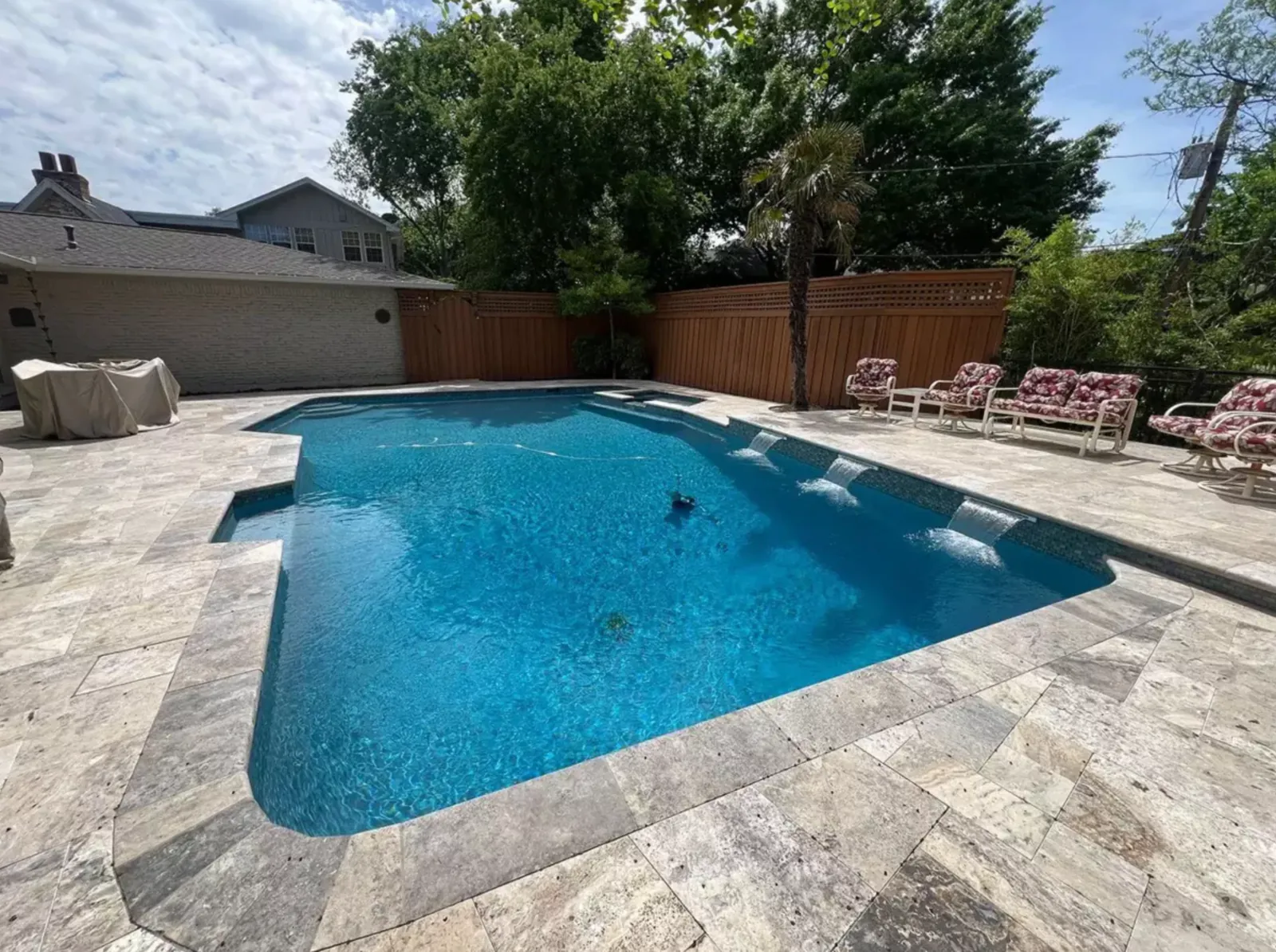
What makes a sunlit surface warmer?
Paving absorbs part of the sunlight that reaches it and reflects part away. EPA describes cool-pavement approaches that increase solar reflection, encourage evaporation or otherwise change the surface to reduce heat. A product’s properties and its exposure both matter.
That means “pavers versus concrete” is too broad a comparison: many pavers are themselves made of concrete. Color can be a useful starting point, but the actual product and finish deserve more attention than a category name.
Compare products in the same conditions
A shaded sample and a full-sun sample do not provide a fair comparison. Neither does a wet surface beside a dry one. Evaluate the proposed finishes under comparable sun and weather conditions, and request any manufacturer temperature or solar-reflectance information with its test conditions.
A temperature claim from one product should not be transferred to every color or finish in a collection. The joints between pavers are not a guarantee of a cool surface.
Design for comfort beyond the paving
Shade over a seating area, the route from the house and the location of furniture also shape the poolside experience. A lighter-looking deck is only one design choice.
- Compare finish samples with the coping and house materials.
- Consider the areas that receive the strongest sun during your usual pool hours.
- Review product suitability, wet conditions and care requirements separately from temperature.
Precision Pavers can discuss these choices in a pool-deck proposal. No finish should be sold as a guarantee of comfortable bare feet in every condition.