
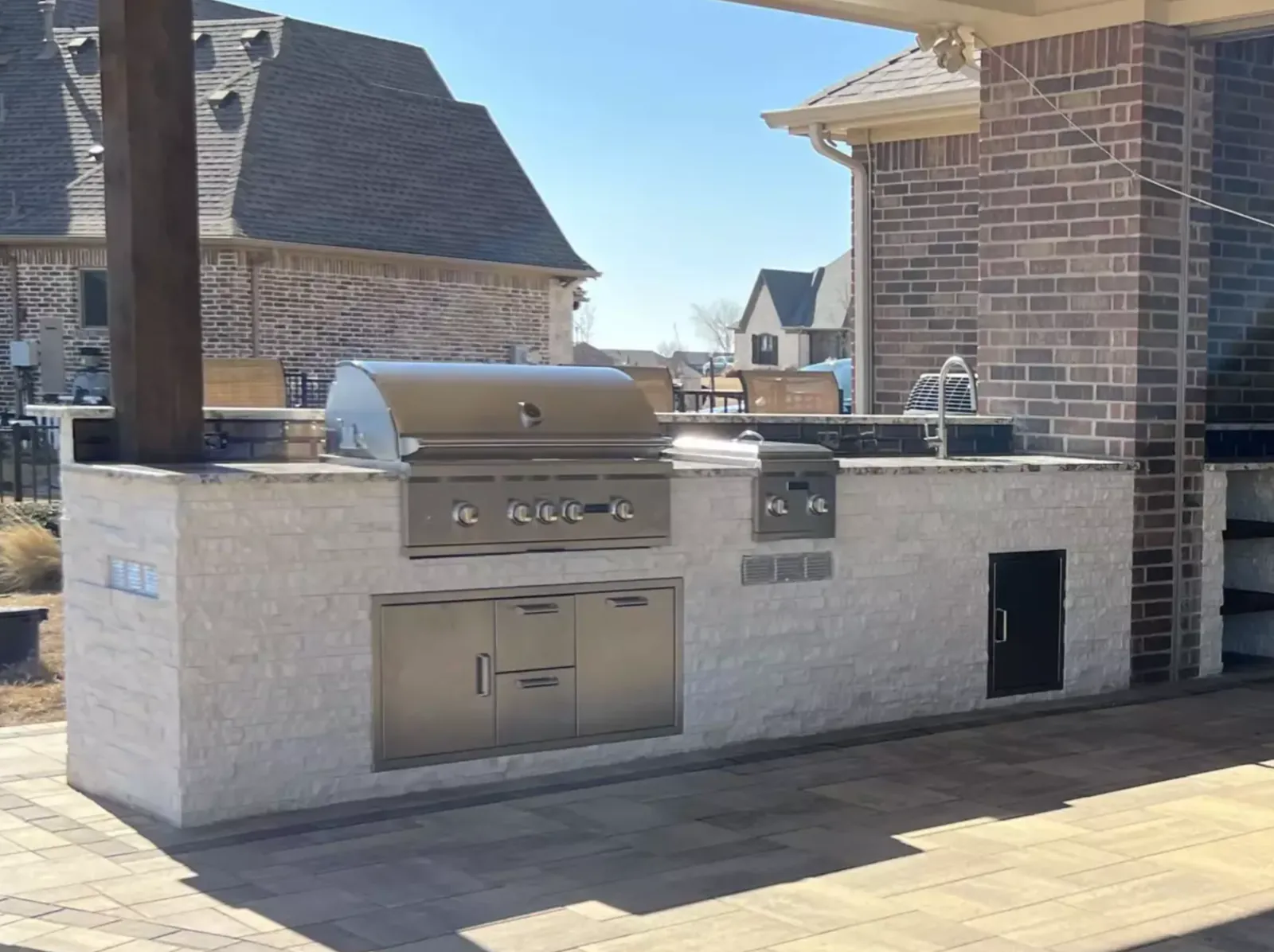
Start With Two Connected Zones, Not One Crowded Patio
An outdoor kitchen is an active work area. A fire pit is a place to settle in. Combining them successfully does not mean placing both in the same tight footprint; it means giving each zone enough room while preserving an easy path between them.
Start with the doors from the house, the normal route to the yard or pool, and the number of people who will cook, sit, and pass through the space. The kitchen should keep hot appliances and open cabinet doors out of the main walkway. The fire pit should leave room for chairs, knees, walking clearance, and a safe route after dark.
When those dimensions are established first, the patio can connect cooking, dining, and fireside seating without forcing guests through the cook’s workspace.
Place the Kitchen for Cooking and the Fire Pit for Conversation
Kitchen placement begins with the cooking sequence: cold storage, prep, grill or cooktop, serving, and cleanup. Counter space beside the grill is often more useful than adding another appliance, and a landing area near the house can make it easier to carry food and dishes outside.
The fire zone should face the view or gathering area rather than the back of the kitchen. Think about prevailing wind, smoke where applicable, heat near chairs, and whether a seat wall or loose furniture better suits the way the patio will be used. Sight lines matter too: people at the fire should still feel connected to the cook and dining table without sitting in a traffic lane.
For an Allen property with a pool, side gate, or multiple back doors, map those routes before deciding where either feature belongs.
Coordinate Fuel, Utilities, and Ventilation Early
Fuel choice affects placement, installation, and daily use. Wood brings smoke, sparks, ash, and fuel storage into the plan. Natural gas requires a suitable utility route and shutoff strategy. Propane needs accessible tank placement that follows the appliance requirements.
The outdoor kitchen may also need electrical service, water, drainage, lighting controls, or gas. Routing those systems before the patio and masonry are complete is usually cleaner than cutting into finished work later. The exact appliances should be selected early enough for their clearances, ventilation, access panels, and manufacturer specifications to shape the design.
Covered kitchens require particular care. A roof, pergola, or pavilion can improve shade, but it must not create unsafe heat, smoke, or exhaust conditions. Appliance instructions, applicable codes, and qualified trade guidance should determine what can be installed beneath or near a structure.
Choose Materials for Heat, Grease, and North Texas Weather
A coordinated material palette can make the kitchen and fire pit feel like parts of one outdoor room. Repeating a paver color, masonry texture, border, or countertop tone is usually enough; every surface does not need to match.
Performance still comes first. Surfaces close to flame need to be appropriate for the heat exposure and the selected fire system. Kitchen counters and cabinet finishes should be chosen for outdoor use, cleanup, sun, and temperature changes. The patio base, joints, edges, and transitions also need to suit the property’s soil, grade, drainage, and traffic.
Light-colored counters may be comfortable in sun but can show soot or cooking residue differently than darker materials. Highly textured paving can add character while requiring more attention around grease-prone cooking areas. Compare appearance and care before making the final selection.
Plan Drainage and Shade Without Trapping Heat or Smoke
Water should move away from cabinets, appliance openings, gas components, and the center of the fire feature. Patio slope, joints, drains, downspouts, roof runoff, and low spots should be reviewed as one system, especially when a new outdoor room changes the amount or direction of hard surface runoff.
Shade is equally important during Allen summers. A covered cooking zone or well-placed structure can make meal preparation more comfortable, while an open fire zone may be better positioned where heat and smoke can disperse. The two areas can still feel connected through the paving pattern, lighting, planting edges, and an unobstructed path between them.
Lighting should support tasks at the grill and counter, then become lower and softer around seating. Step, path, and seat-wall lighting can make the route between zones easier to read without competing with the flame.
Make Maintenance Part of the Design
Outdoor cooking creates grease, food residue, and frequent foot traffic. Fire features collect dust, leaves, moisture, and—in wood-burning models—ash. Leave practical access for cleaning, appliance service, shutoffs, burner inspection, and drainage instead of sealing every working part behind finished masonry.
After storms, check that drains and openings are clear. Follow the manufacturer’s directions for burner media, covers, cleaning products, winter care, and relighting. If a gas fire pit develops uneven flames, repeated ignition trouble, control damage, or a gas odor, stop using it and contact a qualified professional.
The same planning discipline applies to the surrounding patio. Watch for movement at edges, open joints, standing water, or settlement that changes the route around seating and cooking areas. Addressing those conditions early can keep the outdoor room easier to use and care for.
Questions to Settle Before the Design Is Final
Before choosing finishes, answer the decisions that control the footprint:
- How many people should be able to cook, dine, and sit by the fire at the same time?
- Which doors, gates, pool routes, and yard paths must remain clear?
- Which appliances are essential, and what utilities do they require?
- Will the fire feature use wood, natural gas, or propane?
- Where will smoke, heat, roof runoff, and surface water go?
- Which parts of the space need shade, task lighting, or low-level path lighting?
- Can the current patio support the plan, or should it be extended or rebuilt?
Precision Pavers can bring the patio, kitchen, fire feature, shade, lighting, drainage, and landscape edges into one design conversation. For an Allen consultation, include photos of the current yard and the features you want to connect so the first discussion can focus on the layout decisions that matter most.
Frequently Asked Questions
Outdoor kitchen and fire pit questions for Allen homeowners
How far should a fire pit be from an outdoor kitchen or house?
There is no single clearance that fits every fire feature. The fuel type, manufacturer instructions, flame size, nearby combustible materials, overhead structures, wind, property conditions, and applicable local rules all matter. Confirm the required clearances for the exact appliance or built-in system before finalizing the patio layout.
What are common problems with gas fire pits?
Poor drainage, blocked burner openings, wind exposure, incorrect fire media, inadequate ventilation, and damaged or loose gas components can cause performance or safety problems. Keep debris out of the burner area, follow the manufacturer’s care instructions, and have gas components inspected by a qualified professional when ignition, flame, odor, or connection issues appear.
Should the fire pit use wood, natural gas, or propane?
Wood offers a traditional fire experience but brings smoke, sparks, fuel storage, ash, and cleanup. Natural gas can be convenient when a suitable utility route is available. Propane may offer more placement flexibility but requires tank access and storage planning. Product requirements and applicable local restrictions should be checked before choosing.
Can an outdoor kitchen and fire pit be added to an existing patio?
Sometimes. The existing patio must be reviewed for usable dimensions, condition, slope, drainage, load needs, utility routes, shade structures, and safe clearances. If the surface or layout cannot support the plan, extending or rebuilding part of the patio may create a better long-term result.
How do I maintain the area around a fire pit and outdoor kitchen?
Remove grease and food residue from the kitchen, keep leaves and debris away from the fire feature, clean burner openings only as directed, check drains after storms, and inspect joints, edges, counters, and sealants as materials require. Shut down a gas feature and call a qualified professional if you notice gas odor, irregular flames, damaged controls, or repeated ignition trouble.