
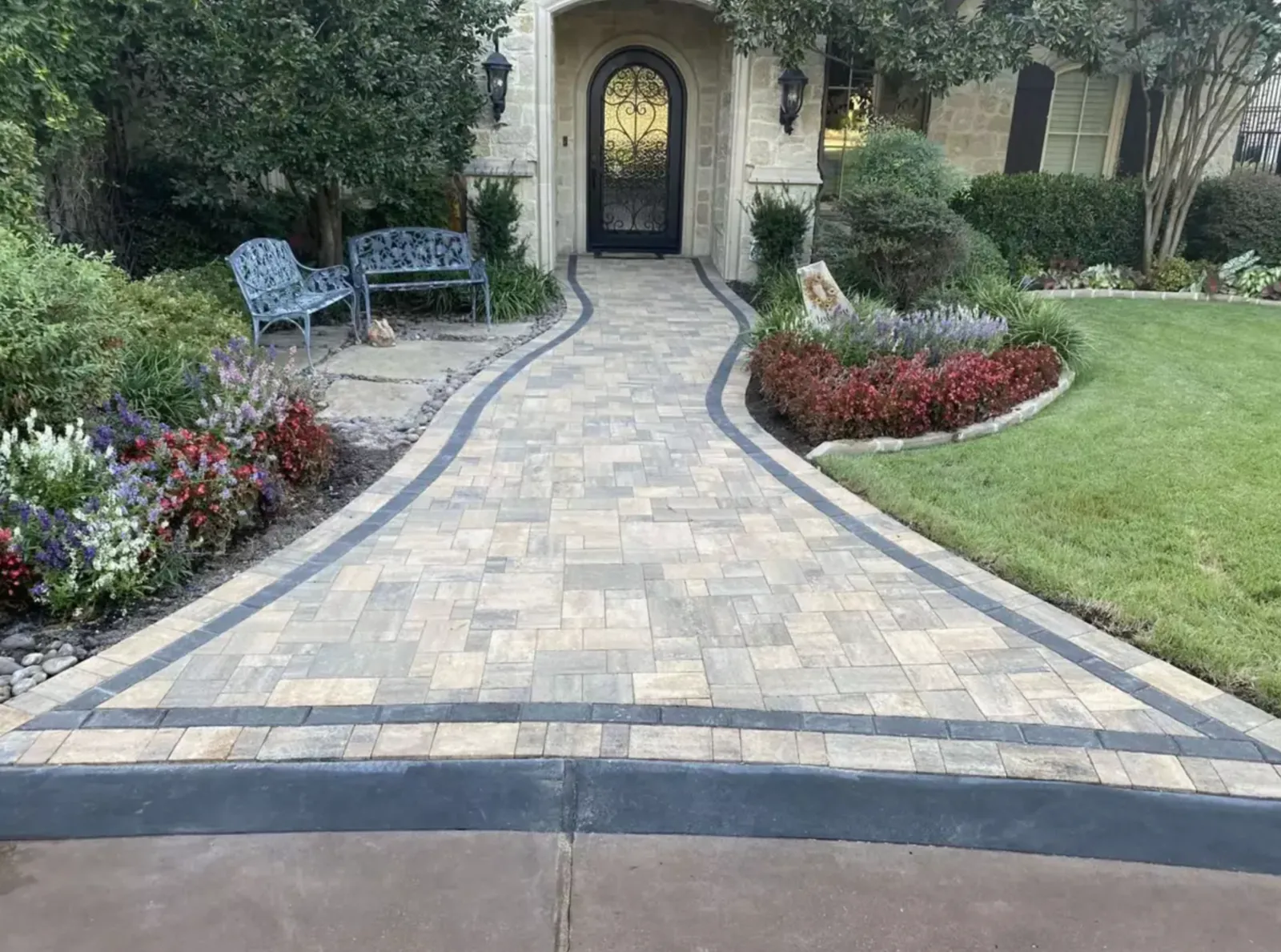
Start with what the garden path needs to connect
A garden path connects destinations while shaping how the yard is experienced. Begin with the route people actually use: from the driveway to the front door, from the patio to a gate, or through a planted area. Then compare the path’s width, surface, borders, and transitions at the scale of the property. Those decisions affect everyday use and appearance; long-term performance also depends on the selected system, site conditions, construction, and care.
Creating Natural Flow in Your Landscape Design
The most important principle in walkway design is one that is easy to overlook: a path should feel inevitable. When done well, it should seem like it was always meant to be exactly where it is, following the natural movement patterns of the people who use it and the contours of the land it crosses.
Before a single paver is laid, the best designs start with observation. Watch how your family naturally moves through the space. Where do feet naturally drift between the driveway and the front door? What is the most comfortable route from the back patio to the garden? The answers to those questions should drive the path of your walkway, not the other way around.
In North Texas, where many DFW properties offer generous lot sizes and room to work with, curved walkways tend to feel more organic and landscape-friendly than strictly linear paths. Gentle curves slow the pace, invite exploration, and create a sense of arrival. They also allow you to work around existing trees, landscape beds, and other features rather than cutting through them.
For front entry walkways on more formal properties, a straight or gently angled approach can feel appropriately intentional and welcoming. The key is matching the path’s character to the architecture of the home and the overall tone of the landscape.
Width matters as much as direction. Compare the space needed for passing, mobility needs, gates, furniture or equipment access, and growing plants at the edge. A main entrance and a quiet garden connection can serve different needs. Confirm applicable accessibility and other requirements for the actual route before fixing its dimensions.
Choosing the Right Paver Size and Pattern
Paver dimensions and pattern change the visual rhythm of a walk. Smaller units can create a detailed field and more frequent joints; larger units can make the surface feel quieter. Lay out the proposed pattern at the intended width so you can see border cuts, curves, and transitions before choosing it.
Herringbone, running bond, basket weave, and mixed-size patterns create different effects. The selected product’s guidance and supporting construction determine how the system should be installed; a decorative pattern alone does not establish resistance to movement.
Compare actual samples for color, texture, glare, and the conditions in which the path will be used. Surface temperature and wet traction depend on the material, finish, exposure, and conditions. Ask for relevant product information instead of assuming color or texture guarantees a particular result.
Edging and Border Options That Finish the Look
A border can distinguish the walking route from the surrounding planting or lawn. A contrasting color makes the edge more visible, while a border in the same material can create a quieter finish. Compare the border with the field pattern, likely cuts, curves, and adjoining paving.
The visible decorative border and the system that restrains the paving serve different roles. Choose edge support and the supporting assembly for the selected product, loads, ground conditions, and drainage; a single concrete-edge recipe is not appropriate for every path.
Consider lighting while the route is being planned. Establish which entrances, changes in level, or junctions need attention, and compare glare, fixture protection, controls, and care access. The aim is to make the intended route clear after dark without lighting every edge equally.
Plan the Base, Drainage, and Edges for North Texas Conditions
The visible paver is only one part of a garden path. North Texas heat, sudden rain, and soil moisture changes make the route, finished elevation, base, and edges important planning decisions. Before choosing the surface, note roof runoff, low spots, irrigation overspray, mulch washout, tree roots, and every place the path will meet lawn, planting beds, gates, steps, or existing hardscape.
Preparation should respond to the actual site. Excavation, a compacted base, edge restraint, joint treatment, and clean transitions all help keep the walking surface stable and the borders defined. Drainage should be considered with the surrounding yard so the finished path does not trap water near an entry or interrupt the route runoff already takes.
Precision Pavers can plan a garden path as a focused improvement or coordinate it with walkways, stone steps, retaining walls, landscape lighting, patios, and drainage solutions when those features meet along the same route.
Bring the Garden Path Into the Rest of Your Outdoor Plan
Precision Pavers has helped North Texas homeowners plan outdoor living projects since 1984. If your garden path needs to connect an entry, patio, pool, gate, or planting area, share the route and current conditions with our team. We can help you discuss the surface, borders, transitions, and related outdoor improvements as one coordinated plan.
Frequently Asked Questions
Garden path and walkway paver questions
What is the difference between a garden path and a primary walkway?
A garden path often follows a quieter route through planting beds or between outdoor rooms, while a primary walkway usually carries more traffic to an entry, driveway, patio, or pool. The expected traffic, width, surface, edging, lighting, and transitions should match the role of the route.
How wide should a garden path be?
Width depends on how the path will be used. A secondary garden route for one person can be narrower than a front walk or an entertaining-area connection where two people may need to pass. Furniture access, gates, steps, planting growth, and maintenance equipment should be considered before the width is finalized.
Which paver patterns work well for curved garden paths?
Small and medium-format pavers can follow curves with controlled cuts and detailed borders, while larger units can create a quieter, more contemporary look when the route and path width support their scale. Review the field pattern, border, likely cuts, and adjoining materials together rather than choosing a pattern from a single sample.
How should drainage be considered around a North Texas garden path?
Start by noting downspouts, low areas, irrigation overspray, mulch movement, and where water crosses the proposed route. The path's finished elevation and edges should be planned with the surrounding lawn, beds, entries, and hardscape so the new surface does not create an unintended low point or barrier.
Does Precision Pavers design and install garden paths?
Yes. Garden Paths and Walkways are listed Precision Pavers services for North Texas properties. The team can discuss a focused path project or how the route should connect with patios, steps, walls, lighting, planting, and drainage improvements.