
Short Answer
Comparing concrete vs pavers for a patio?
Pavers offer individual units, visible joints and modular patterns; poured concrete creates a slab with its own finish and joint layout. For a patio, compare the look beside your home, furniture layout, drainage, care and repair approach. For a driveway, the paving system also needs to suit the vehicles using it.
Read the patio-specific paver vs concrete comparisonPavers vs poured concrete: appearance and layout
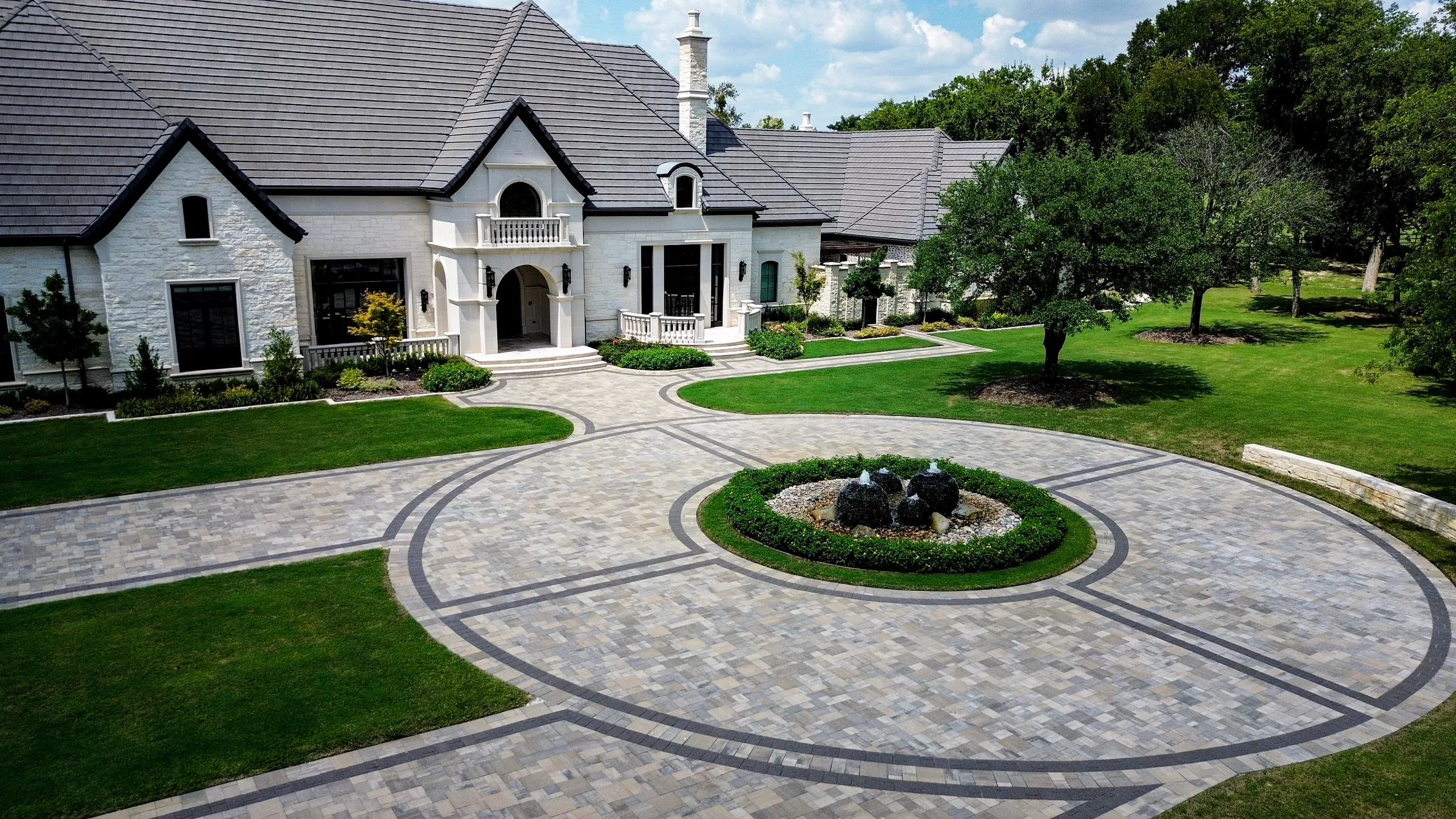
Pavers create a surface from individual units, so joints and laying patterns are part of the appearance. Poured concrete creates a different composition, with its finish and planned joints contributing to the result. Concrete pavers and poured concrete are not opposing material categories in every respect; both can use concrete.
Compare the scale and finish beside the house, garage and front path. The preferred look is a design choice, not proof of better performance.
Driveway construction must suit vehicle use
Each proposal should explain its complete paving system, preparation, edges, grades and connections. CMHA’s paver application guide shows why the units cannot be evaluated separately from their supporting construction. The suitable design depends on the intended use and site.
A patio layout is not a driveway specification. Tell the project team about daily parking, delivery vehicles and any heavier vehicles that will use the drive. CMHA identifies soil strength, drainage, climate and traffic loads as factors in base design. Those conditions matter more than choosing a pattern first.
Paver repairs can be local, but the cause matters
Paver systems can permit removal and reinstatement of individual units for some repairs. A defect in support or drainage still needs its cause addressed. Existing concrete problems also need assessment before choosing a repair or replacement approach. Neither material should be described as immune to cracking, movement or maintenance.
Compare complete driveway estimates
Put these items on the same comparison sheet: removals; site preparation; proposed finish; edges and transitions; drainage work; access and restoration; care information; and written coverage.
Installed costs and later repair costs depend on that scope. Avoid treating a general lifespan or resale claim as a substitute for the proposal. Precision Pavers can discuss the paver option for the driveway you want to create, including its connection to your garage and front walk.
Frequently Asked Questions
Concrete and paver driveway questions
Can I use the same pavers for a driveway and a patio?
Only if the selected product and complete paving system are suitable for both uses. A patio product is not automatically appropriate for vehicle traffic. For a driveway, identify the vehicles, turning areas and frequency of use before choosing the units and supporting construction.
Are pavers always cheaper than poured concrete?
No single price comparison applies to every driveway or patio. Compare quotes for the same footprint, removal, preparation, finish, edges, drainage and restoration. Include care requirements and the proposed repair approach, rather than relying on a material-only price or a promised lifespan.
Can individual driveway pavers be replaced?
Individual units can often be lifted and reinstated or replaced for a localized repair. Settlement, failed edge support or drainage problems still need their underlying cause addressed. Matching replacement units and access to the repair area also affect the result.